Los Angeles Editorial Photographer | The Last Rock ’n’ Roll Girl
The Last Rock ’n’ Roll Girl — Katherine Kiss in Los Angeles
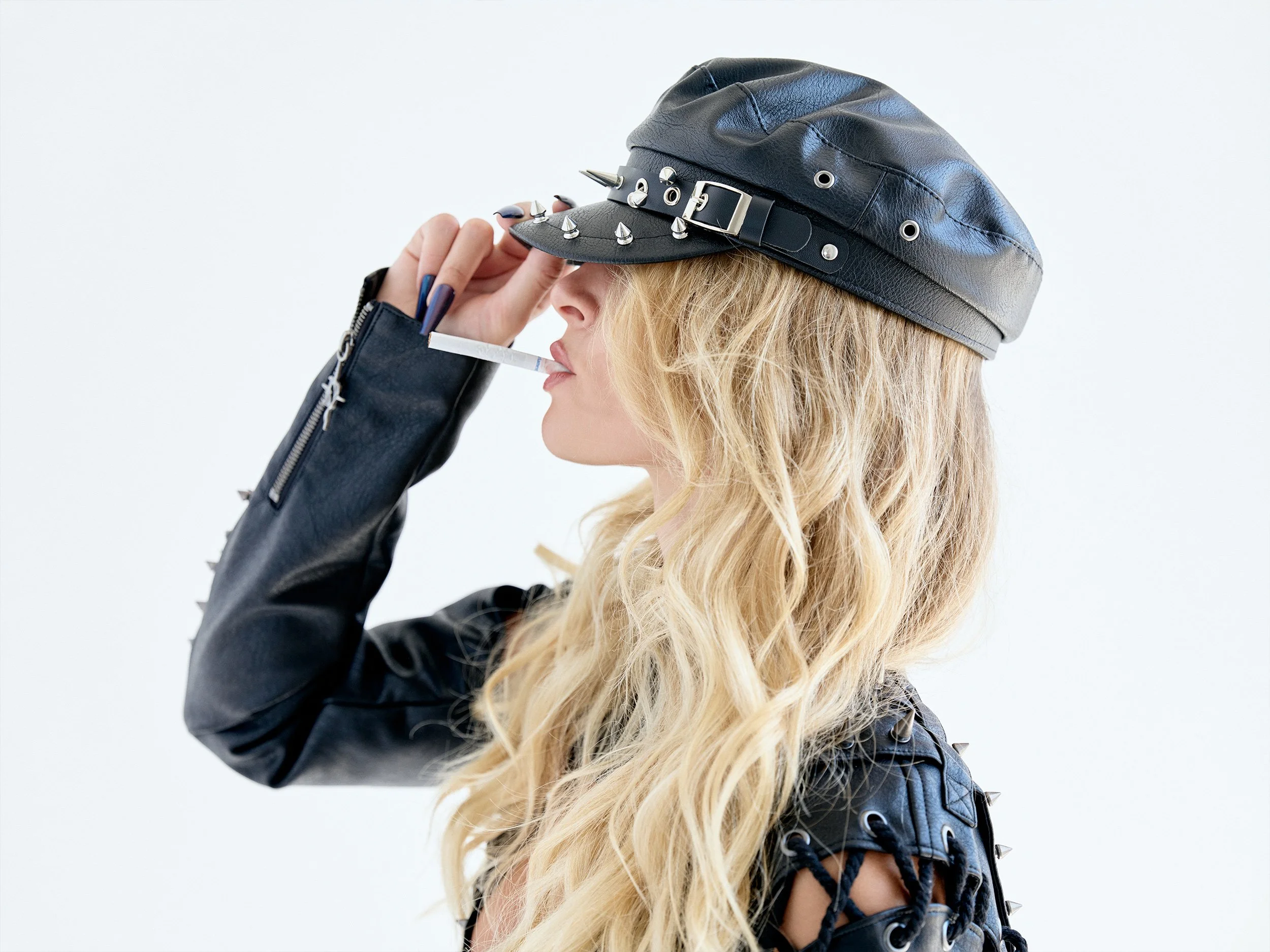
White light, black leather and the unmistakable presence of a woman who calls herself a rock ’n’ roll girl.
Photography and direction by Aram Kay
Model: Katherine Kiss
Los Angeles Arts District, California
Studio: Ivory Space
Katherine Kiss arrived with an identity already formed. The purpose of this editorial was not to soften it for the camera or turn it into a costume. It was to build a visual world around the attitude she naturally carries.
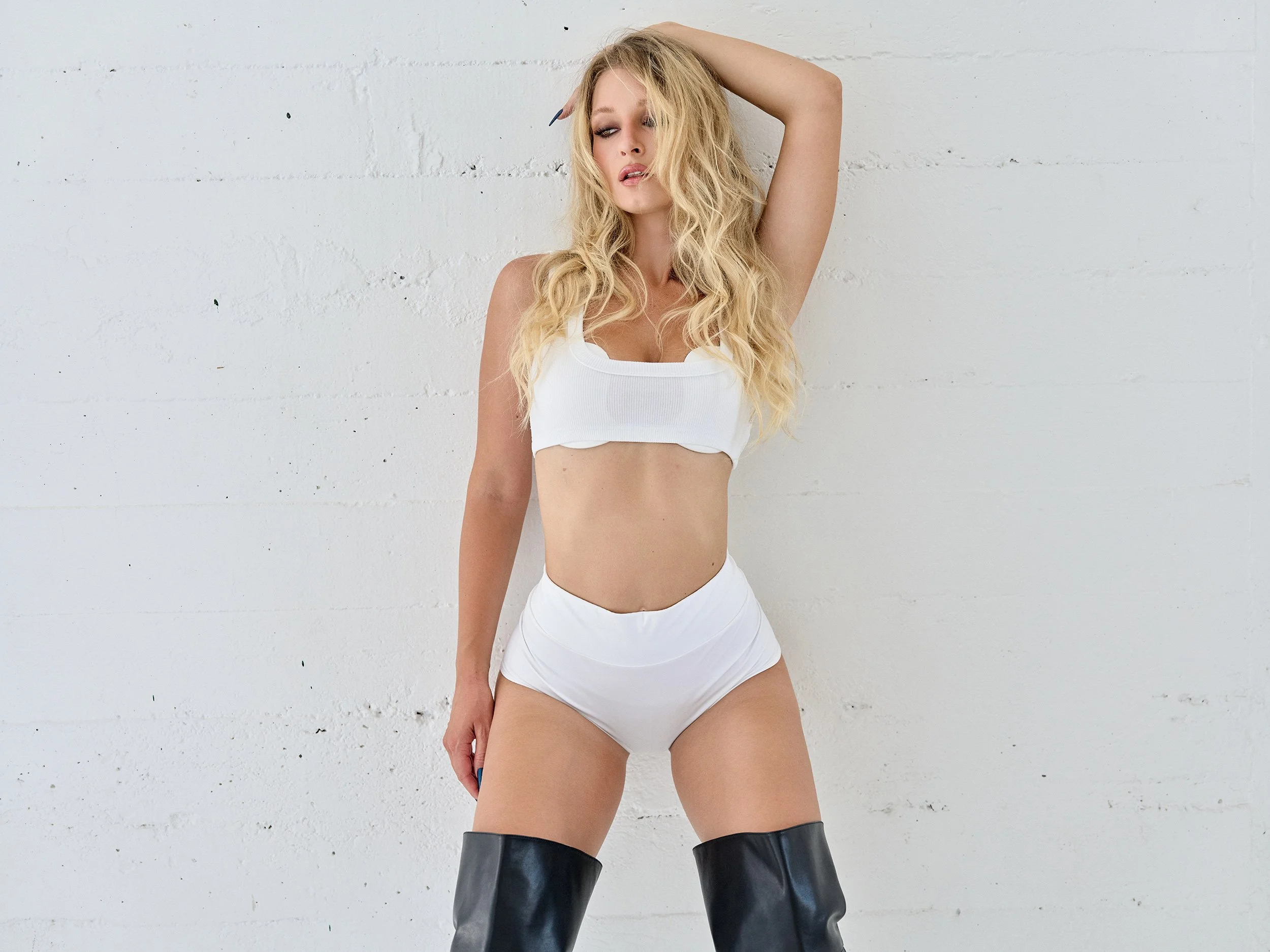
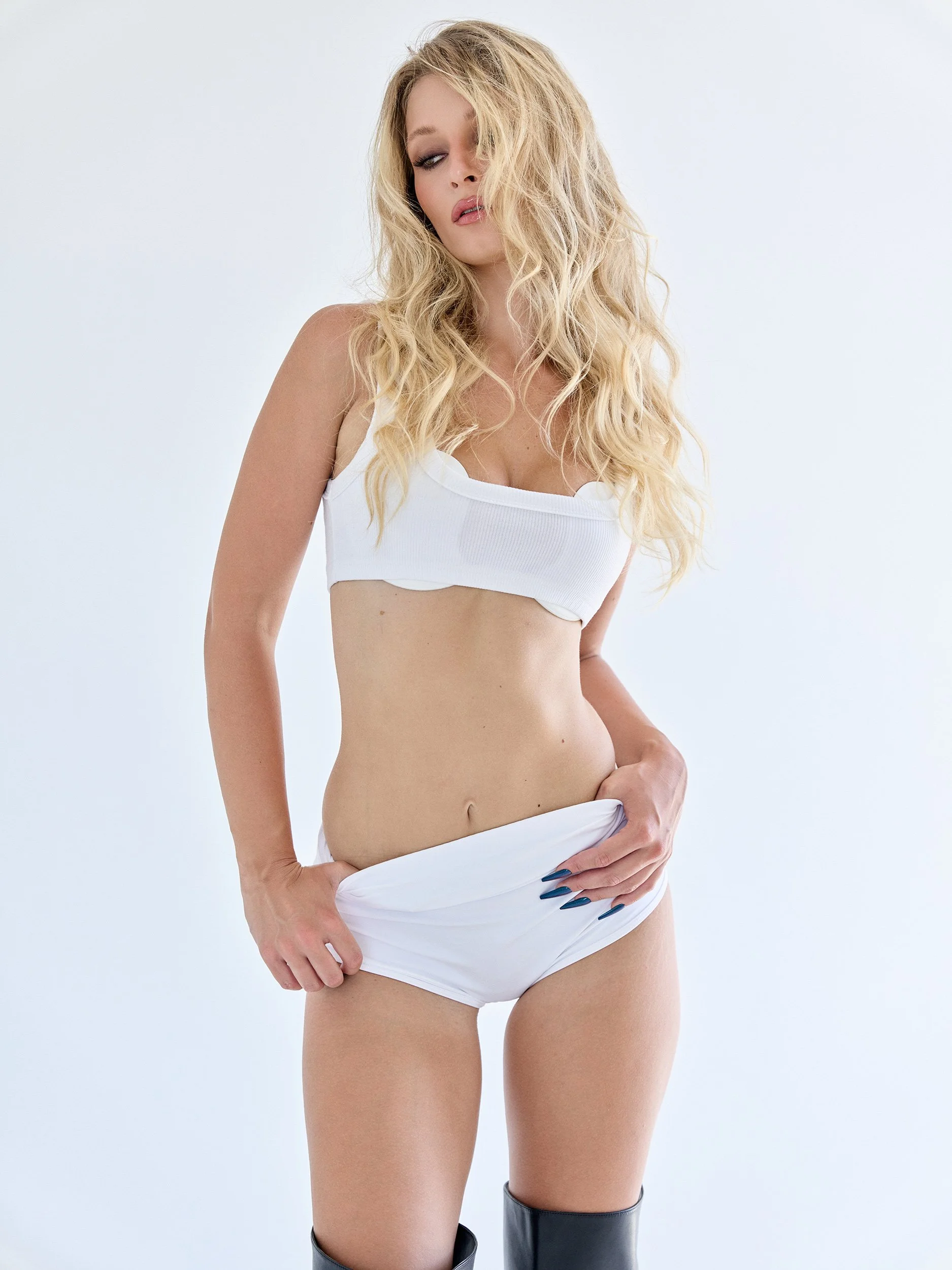
Created as a two-person production in the Los Angeles Arts District, The Last Rock ’n’ Roll Girl moves through two sharply contrasting looks. White ribbed separates and knee-high black boots establish a stripped-back beginning. Studded leather, metal hardware and a peaked cap then push the same character into something louder and more confrontational.
The wardrobe changes, but Katherine never disappears beneath it.
The Rock ’n’ Roll Girl
Rock ’n’ roll style becomes unconvincing when it depends entirely on leather, spikes and familiar gestures. The character has to remain present when those recognizable elements are removed.
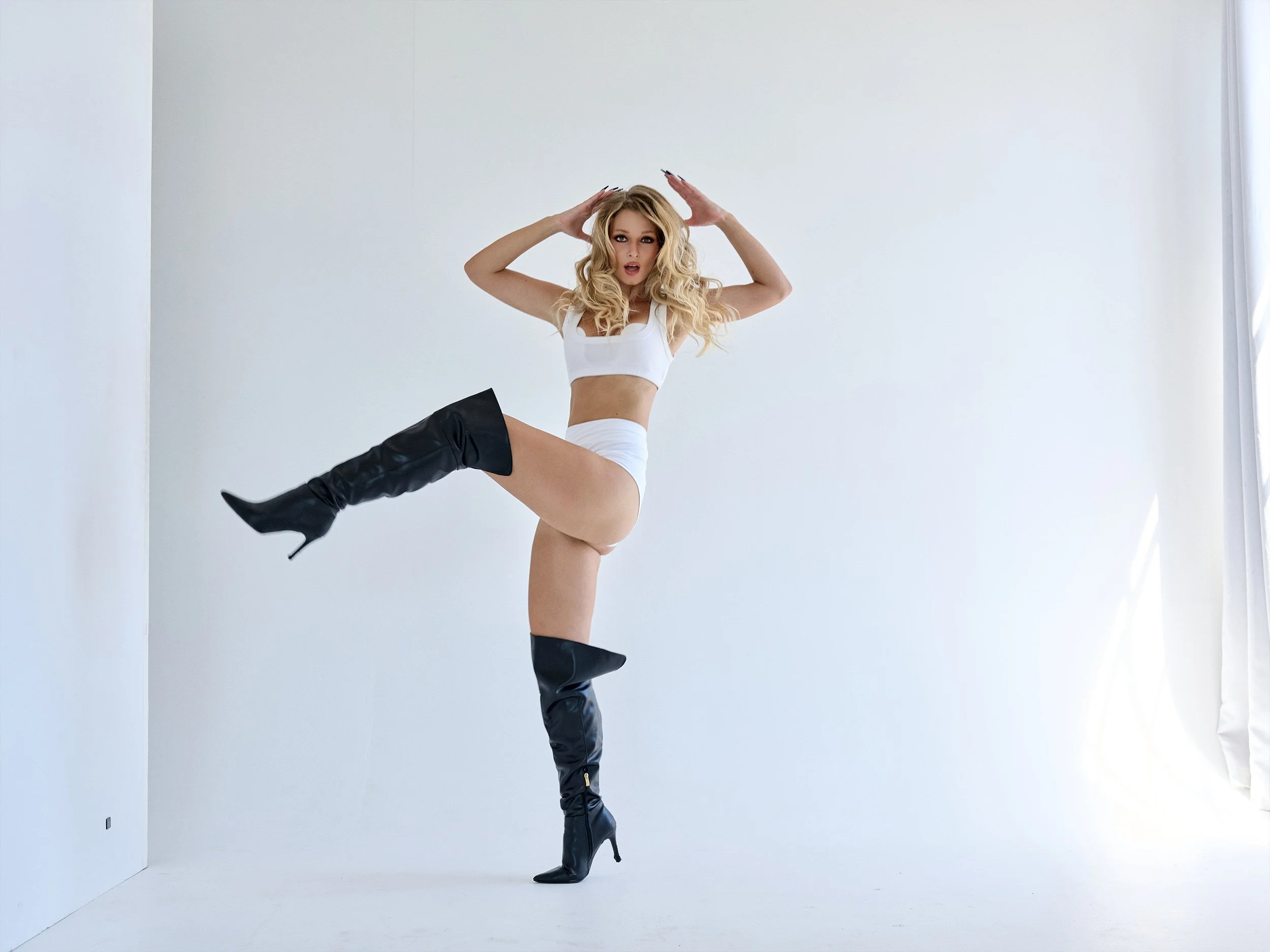
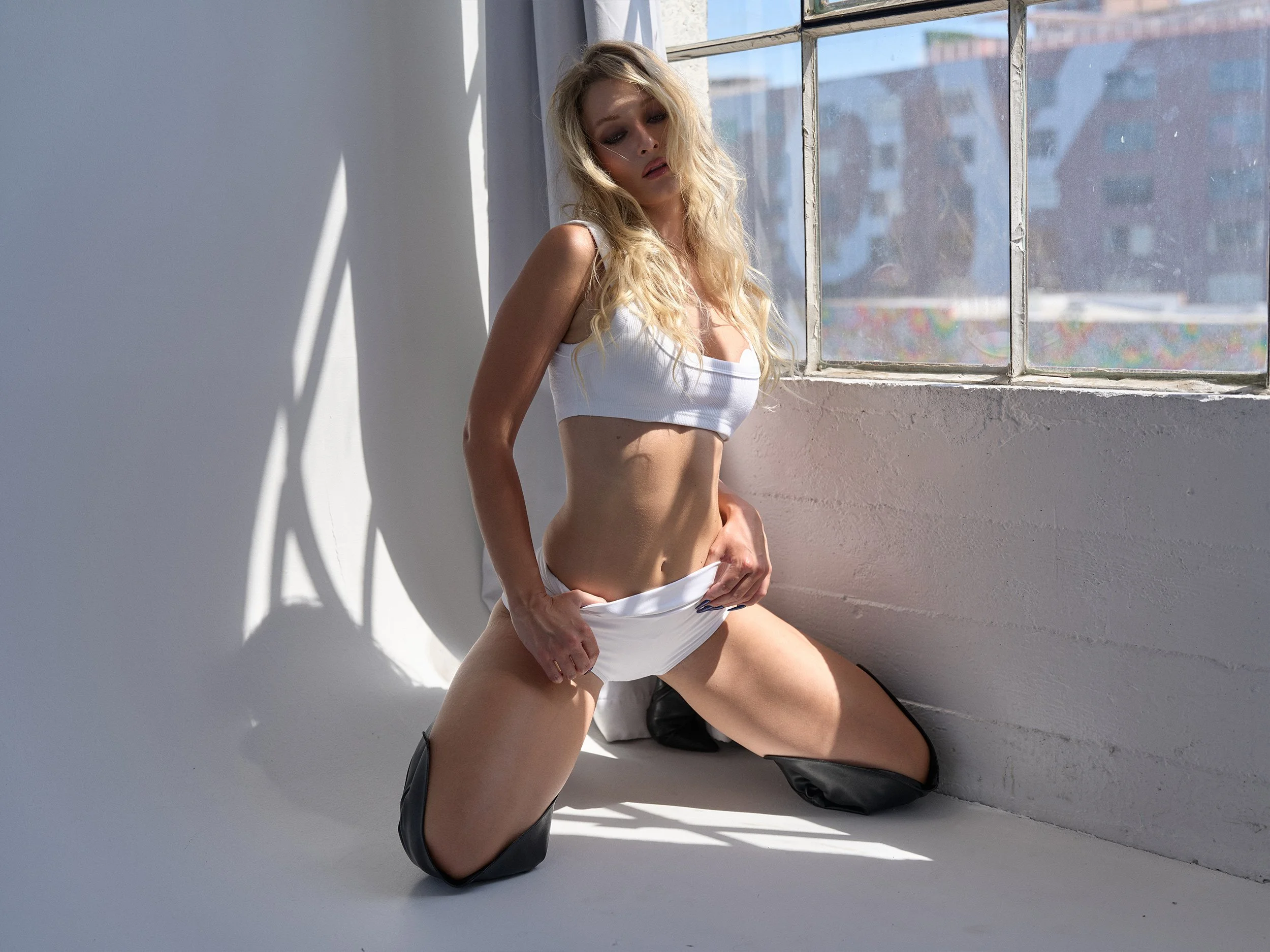
The white look was photographed first for precisely that reason. Against the nearly empty studio, Katherine had only movement, expression and body language to carry the photographs. The simplicity exposes everything: the line of a raised leg, the position of a hand, the tension inside a still portrait and the difference between performing for the camera and genuinely commanding it.
Black boots interrupt the white palette and hint at what follows. Her cobalt nails become another connecting detail, remaining visible as the story moves from restraint into a more complete rock ’n’ roll silhouette.
Editorial Photography in the Los Angeles Arts District
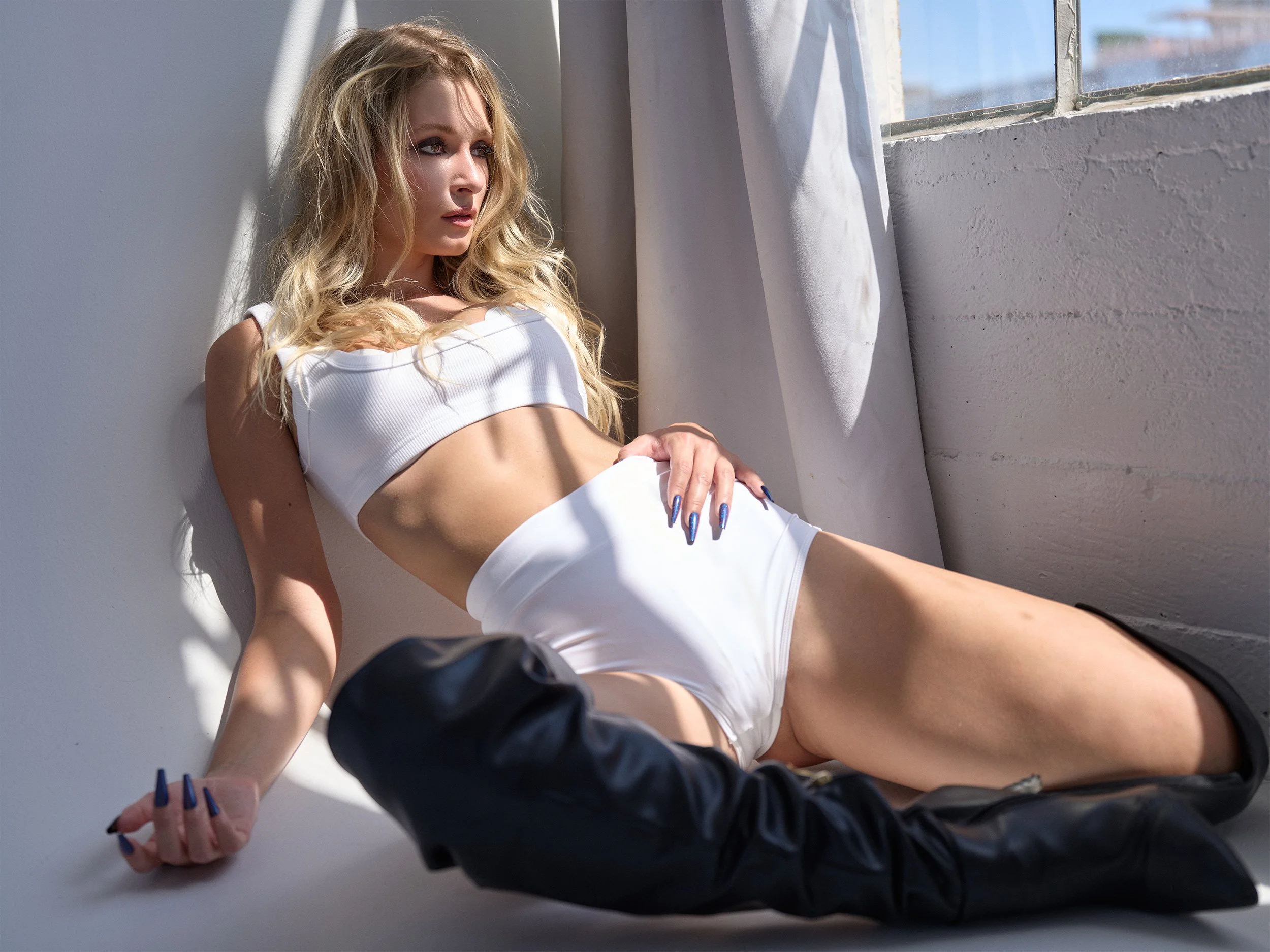
The industrial windows and direct midday sun gave the session its structure. Rather than diffusing the daylight into uniformly flattering illumination, the photographs preserve its harder qualities.
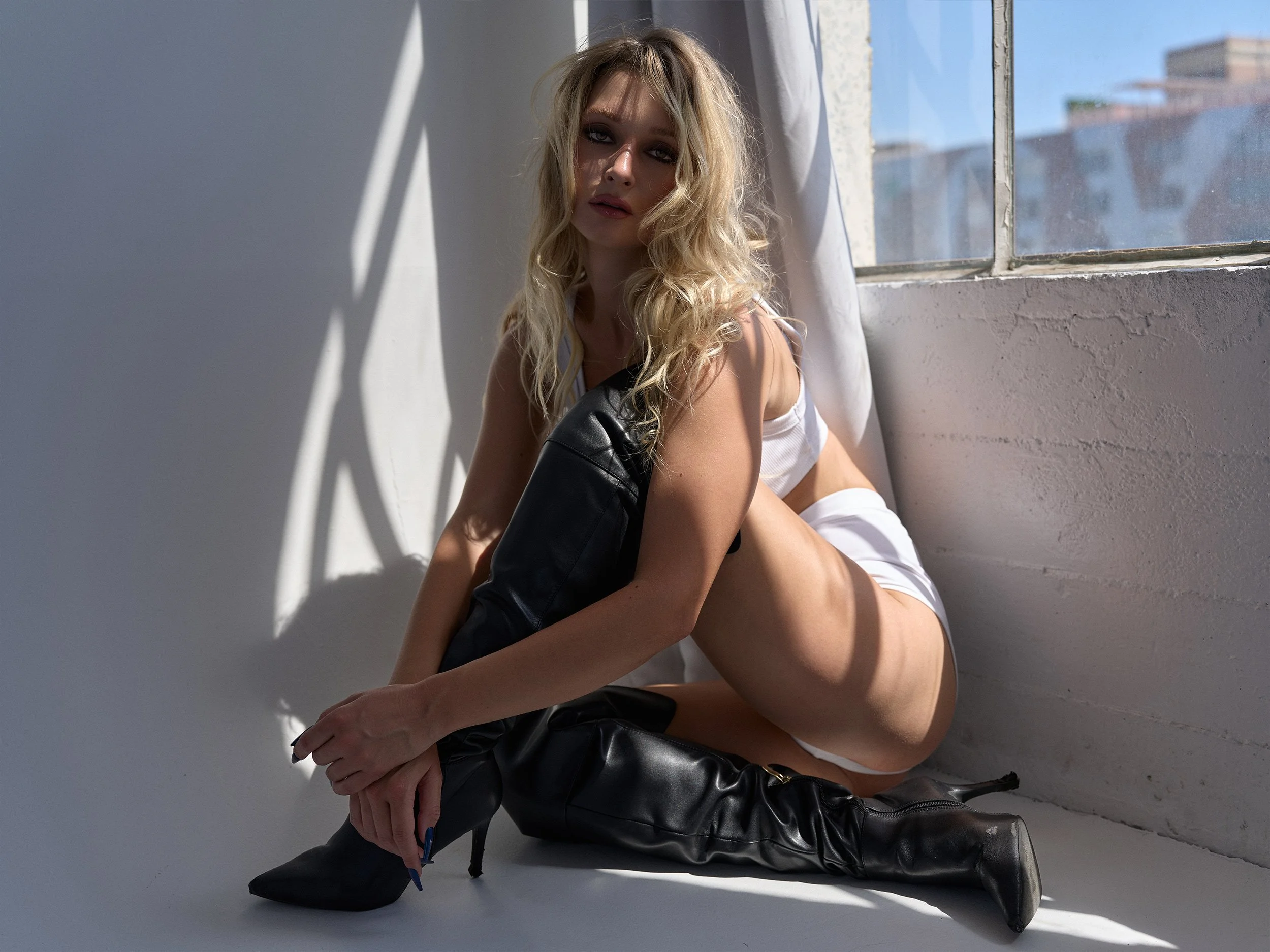
Sunlight cuts across Katherine’s face and body, leaving sections of the frame in deep shadow while opening others into nearly pure white. The steel window frames divide the compositions, and fragments of the Arts District remain visible beyond the glass. The location provides context without overpowering the model or wardrobe.
The high-key photographs use the same daylight differently. With most environmental detail removed, the white studio becomes open negative space around Katherine’s silhouette. That visual simplicity allows the movement photographs and direct portraits to coexist inside the same editorial.
Two Looks, One Character
The transition into black leather is not presented as a separate story. It is the same personality becoming more visible.
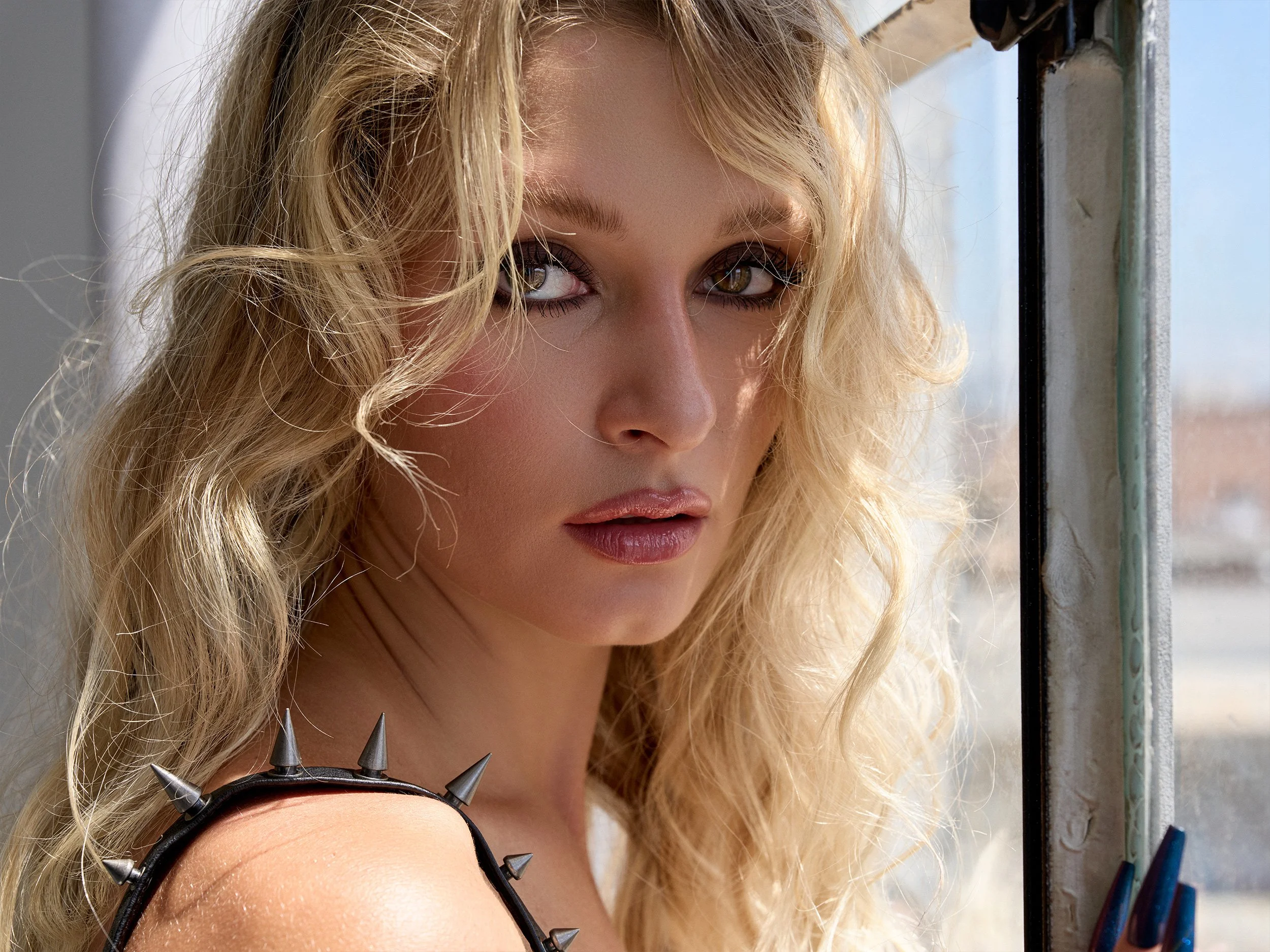
A fitted leather corset, studded shorts, chains and silver hardware replace the white wardrobe. The cap creates a stronger graphic shape around Katherine’s face, while the extended leather sleeves exaggerate her arms and introduce a harder silhouette.
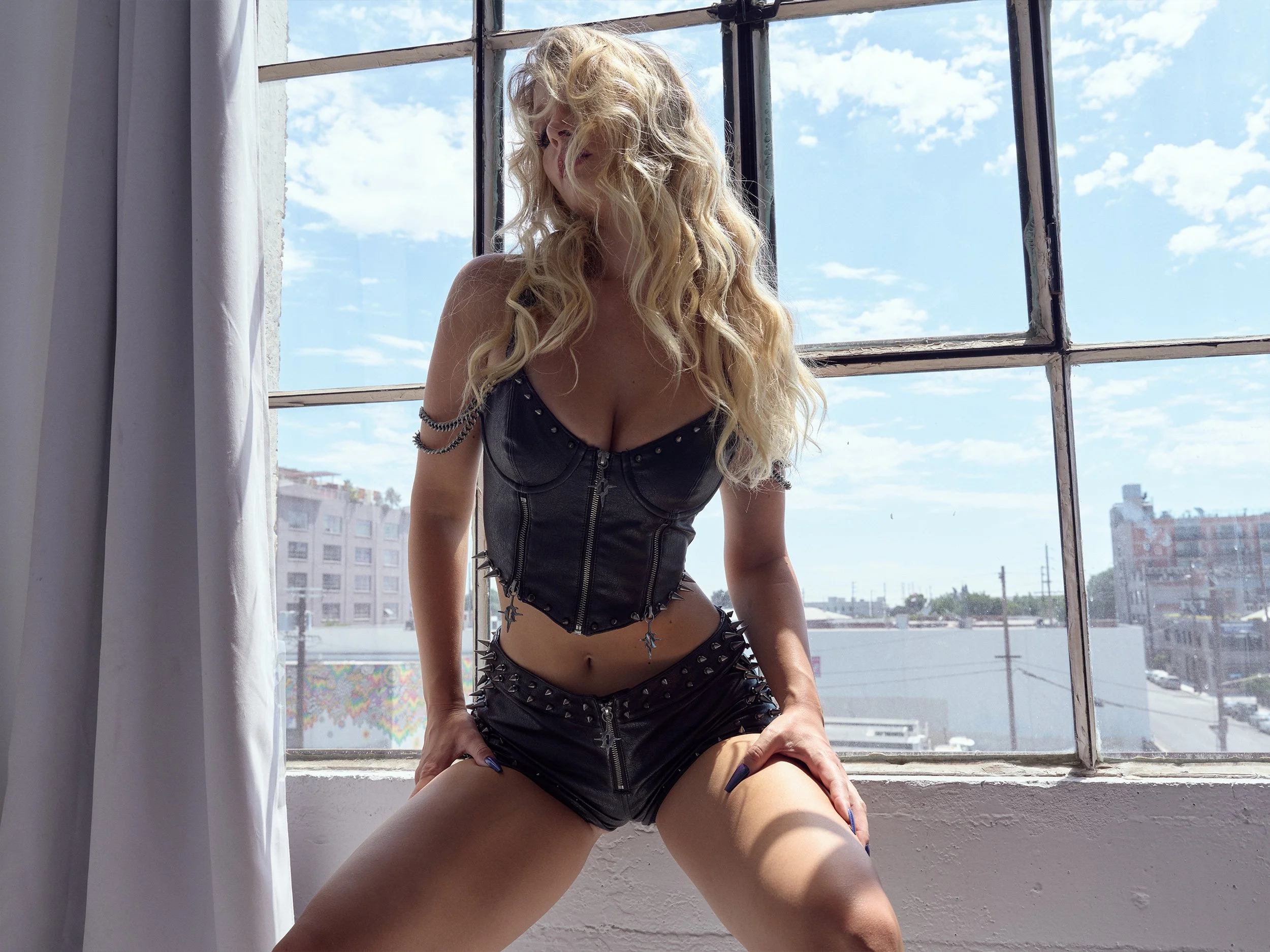
The closest portrait deliberately reduces those elements to a few details: direct eye contact, loose blonde hair, illuminated skin and a row of metal spikes crossing the foreground. Wider photographs reveal the complete styling and Katherine’s relationship with the architecture of the studio.
Together, the two looks demonstrate that editorial range does not require abandoning a model’s identity. Katherine moves between minimal fashion portraiture, physical movement, close beauty imagery and more provocative styling while remaining recognizably herself.
Direction, Movement and Presence
A useful editorial series needs more than several attractive photographs in different outfits. Each frame should reveal another aspect of the subject’s performance.
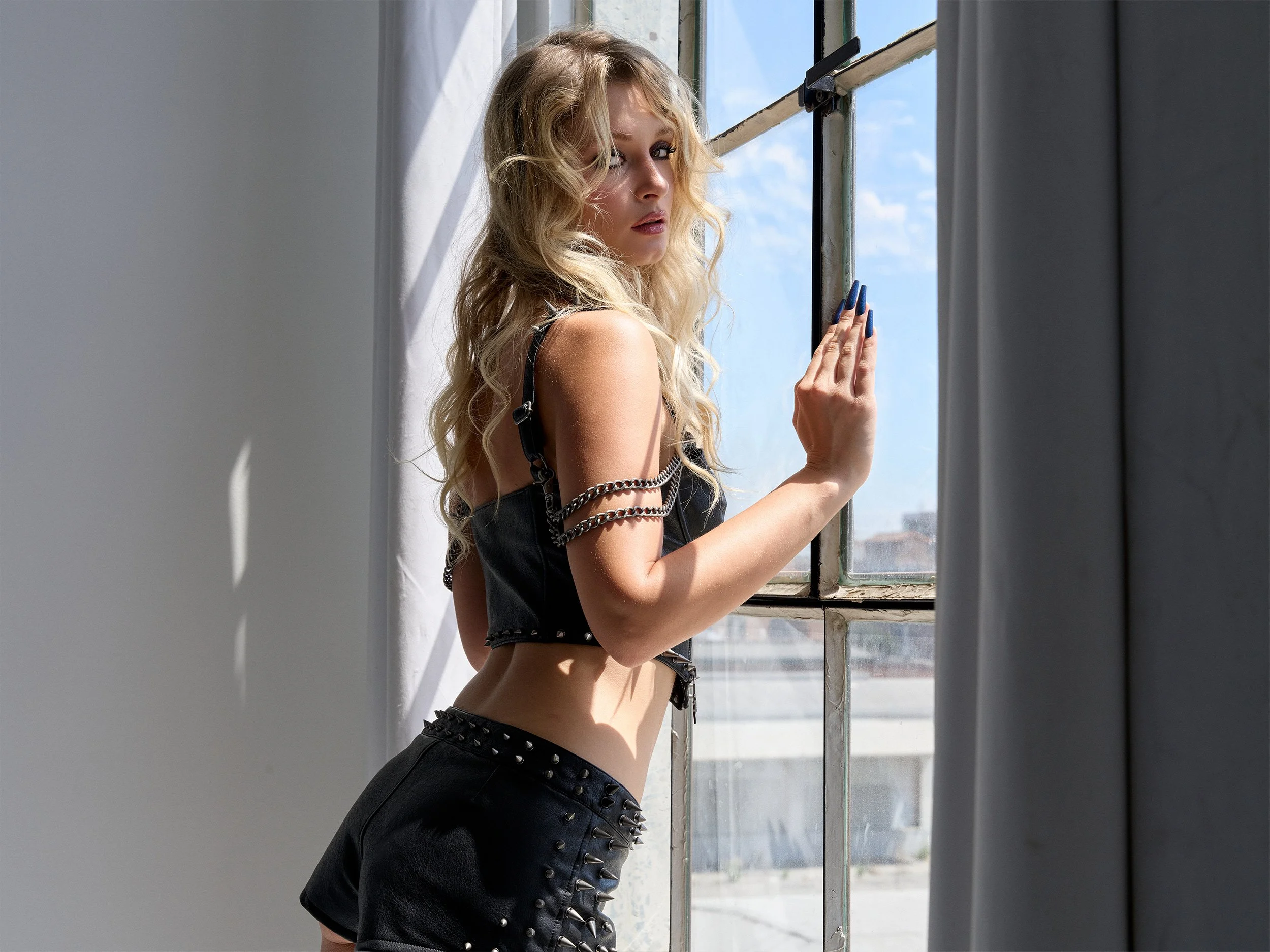
The standing white portrait establishes proportion and composure. The raised-leg composition introduces energy and coordination. Window photographs slow the rhythm and use harder expressions, restrained gestures and direct eye contact. The leather portraits then become tighter, more controlled and increasingly character-driven.
Katherine’s strongest quality throughout the session is her ability to shift the intensity of a photograph without losing contact with the camera. Her performance can be expansive in one frame and almost completely still in the next. That range gives the final selection continuity without making it repetitive.
An Editorial Chapter for Katherine Kiss
The Last Rock ’n’ Roll Girl was created to add a distinctive editorial chapter to Katherine’s existing book. It presents a clear point of view while demonstrating facial presence, movement, proportion, beauty detail and the ability to carry assertive fashion styling.
The finished story is not designed to replace clean agency digitals or conventional casting photographs. Its purpose is different: to show what Katherine can bring to a defined visual concept and how confidently she can inhabit a character across a connected series.
Aram Kay is a Los Angeles editorial photographer creating fashion stories and editorial portraits for models, artists, publications and creative teams. Each session is developed around the subject’s identity, the intended use of the photographs and a visual direction strong enough to produce a cohesive final edit.
View Katherine’s companion tailored editorial, No Dress Code. Explore additional work by Aram Kay as a Los Angeles fashion photographer, or inquire about an editorial photography project.