Blue Impala
San Diego Fashion Editorial in Golden Hill
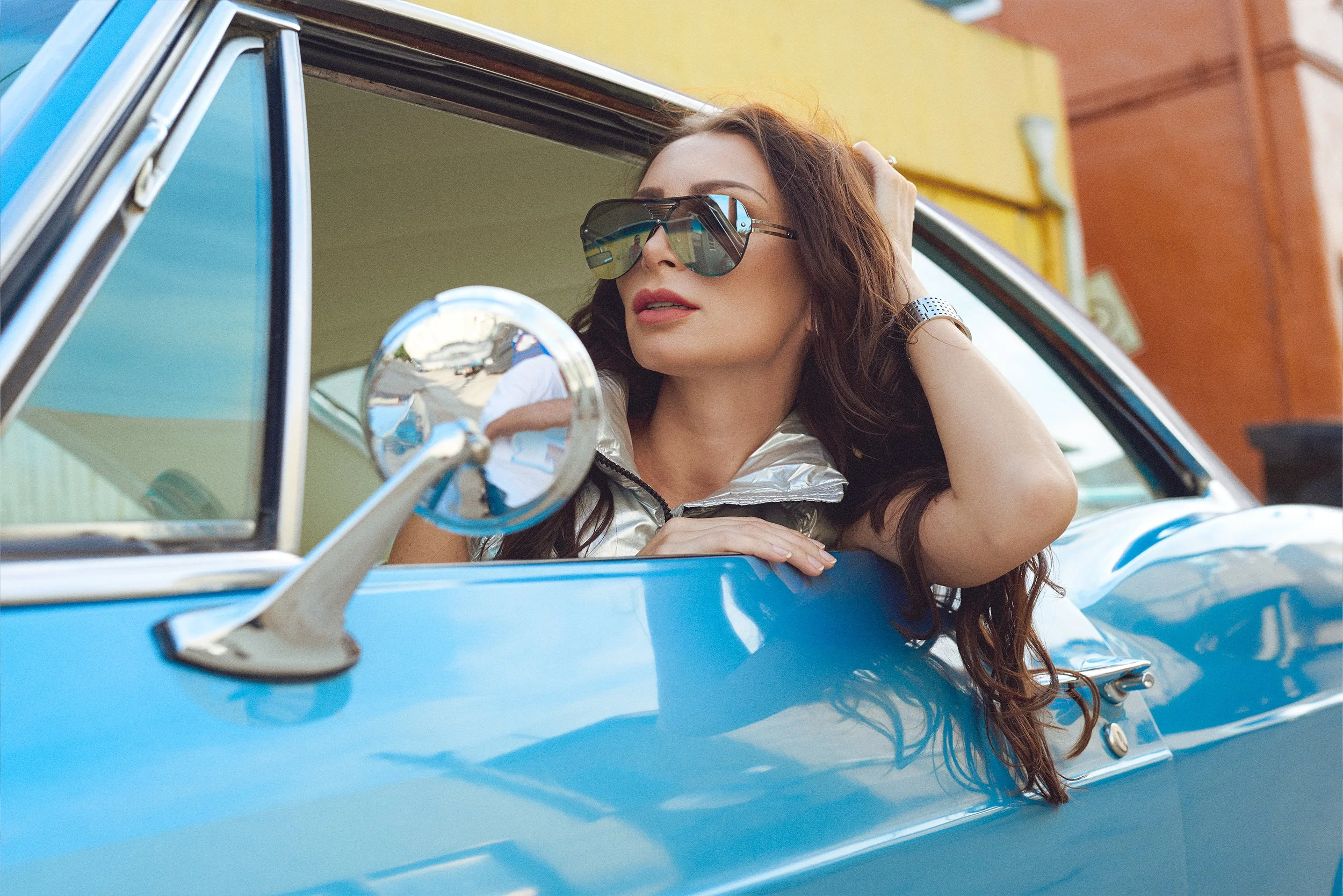
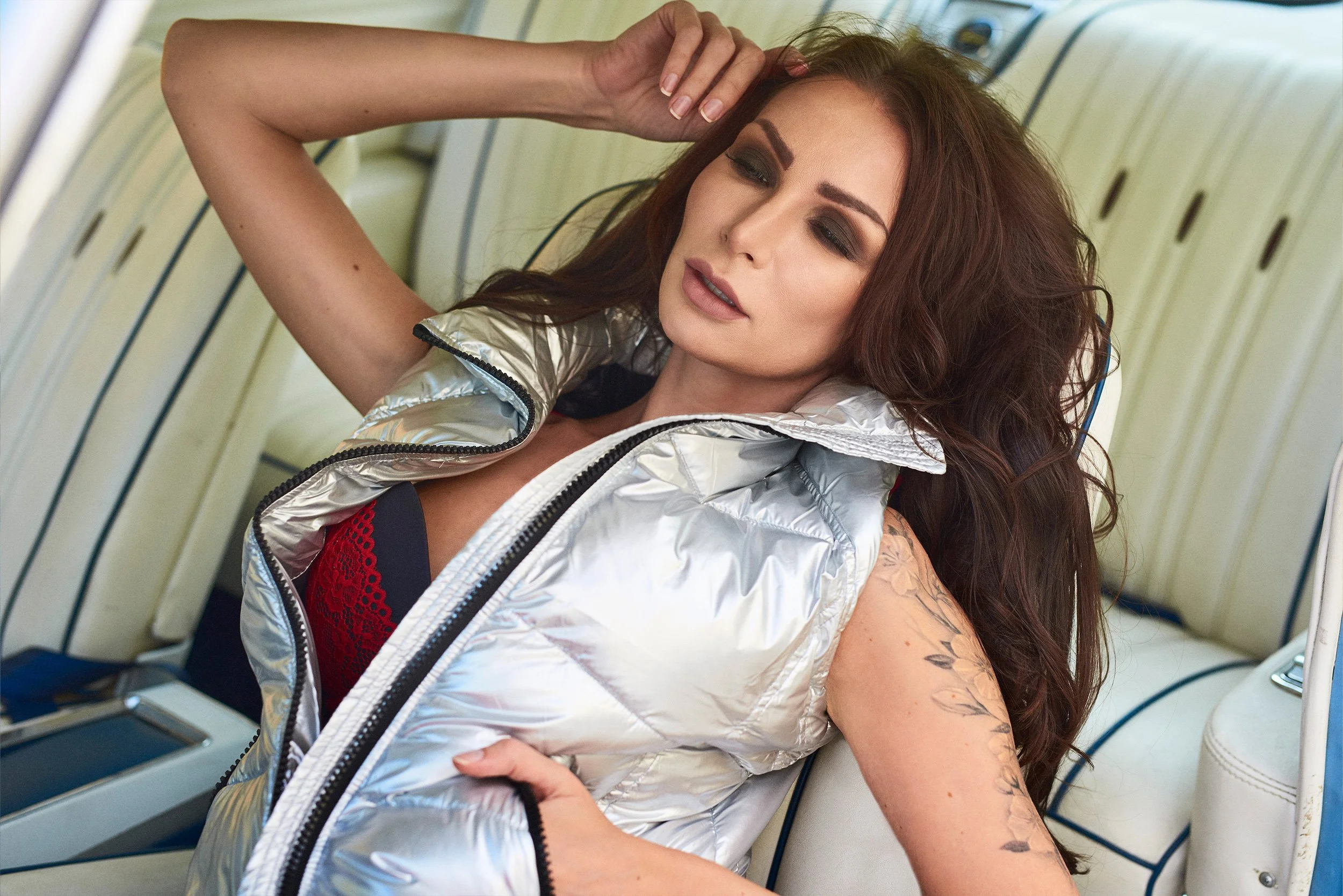
Blue Impala is a San Diego fashion editorial photographed in Golden Hill with model Larissa Sergienko, built around the relationship between fashion, location and a blue 1966 Chevrolet Impala Super Sport.
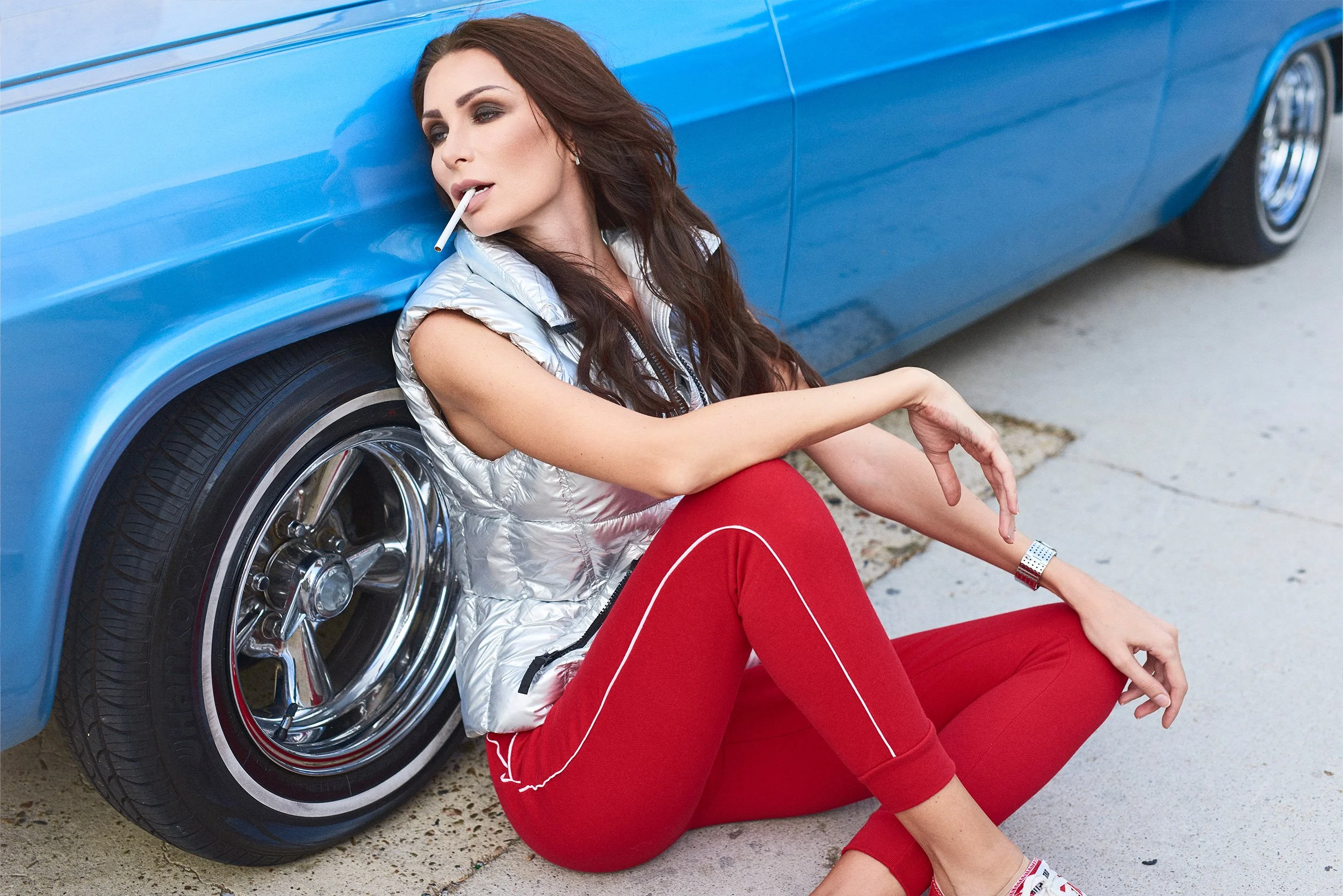
Rather than treating the car as a decorative prop, the production was designed around it. Its saturated blue paint, chrome surfaces, long proportions and unmistakable vintage character became part of the visual structure of the photographs.
Against the residential textures and warm Southern California light of Golden Hill, the Impala gave the story an immediate identity.
The fashion needed to hold its own against something visually dominant, so wardrobe, posing and composition were approached as part of one larger image rather than separate elements.
The result sits between a traditional fashion editorial and the kind of location-driven imagery that can translate naturally into a fashion campaign, apparel advertisement or commercial brand story.
Fashion, Automobile and Location
Some fashion stories begin with clothing. Others begin with a model, a location or a particular quality of light.
Blue Impala began with the relationship between all of them.
A vintage automobile creates scale. It introduces lines, reflections, surfaces and color that immediately affect composition. Once Larissa enters the frame, her posture and wardrobe have to interact with those elements rather than simply exist beside them.
That relationship became the foundation of the shoot.
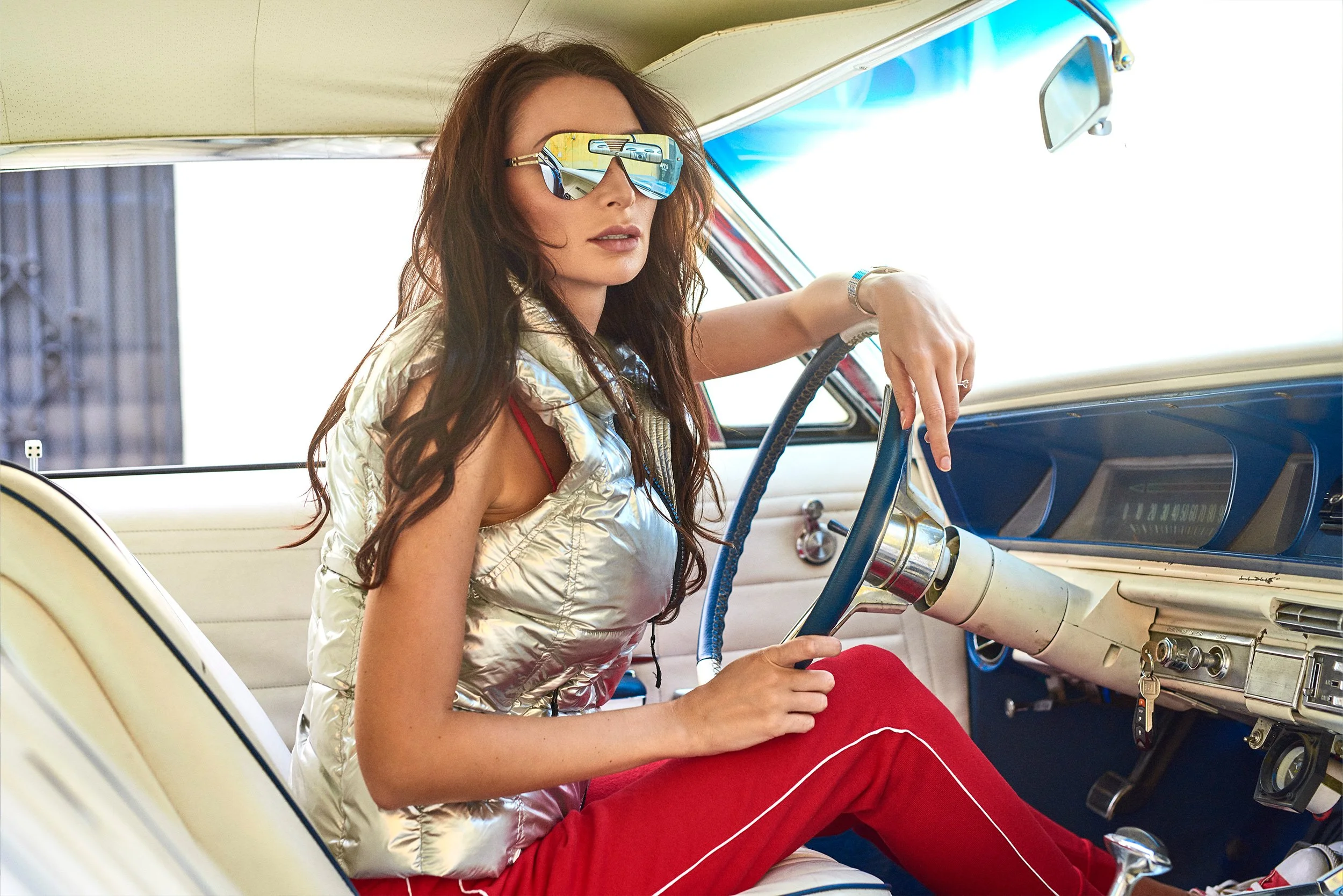
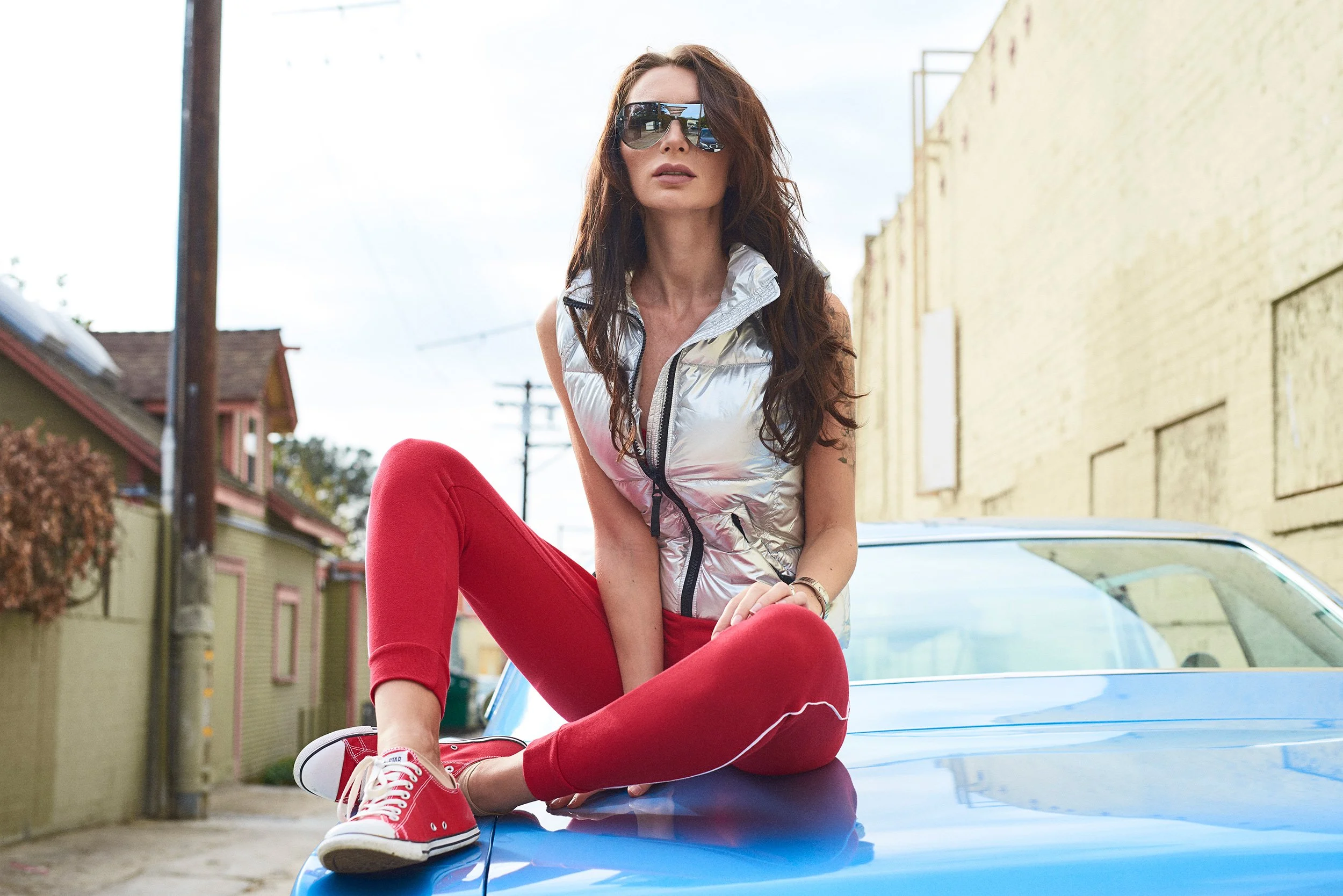
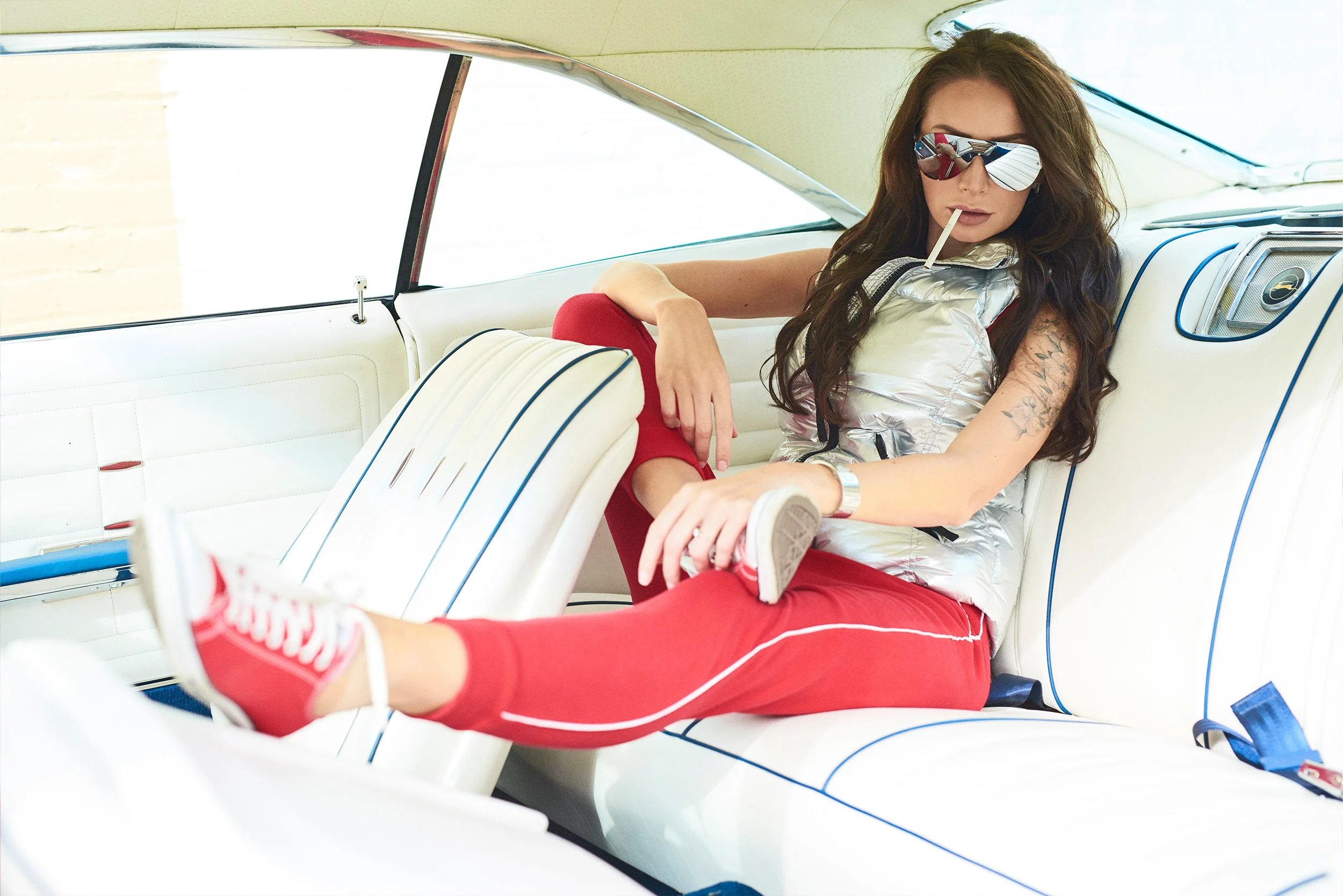
Wide photographs establish the entire environment: model, automobile, neighborhood and California light.
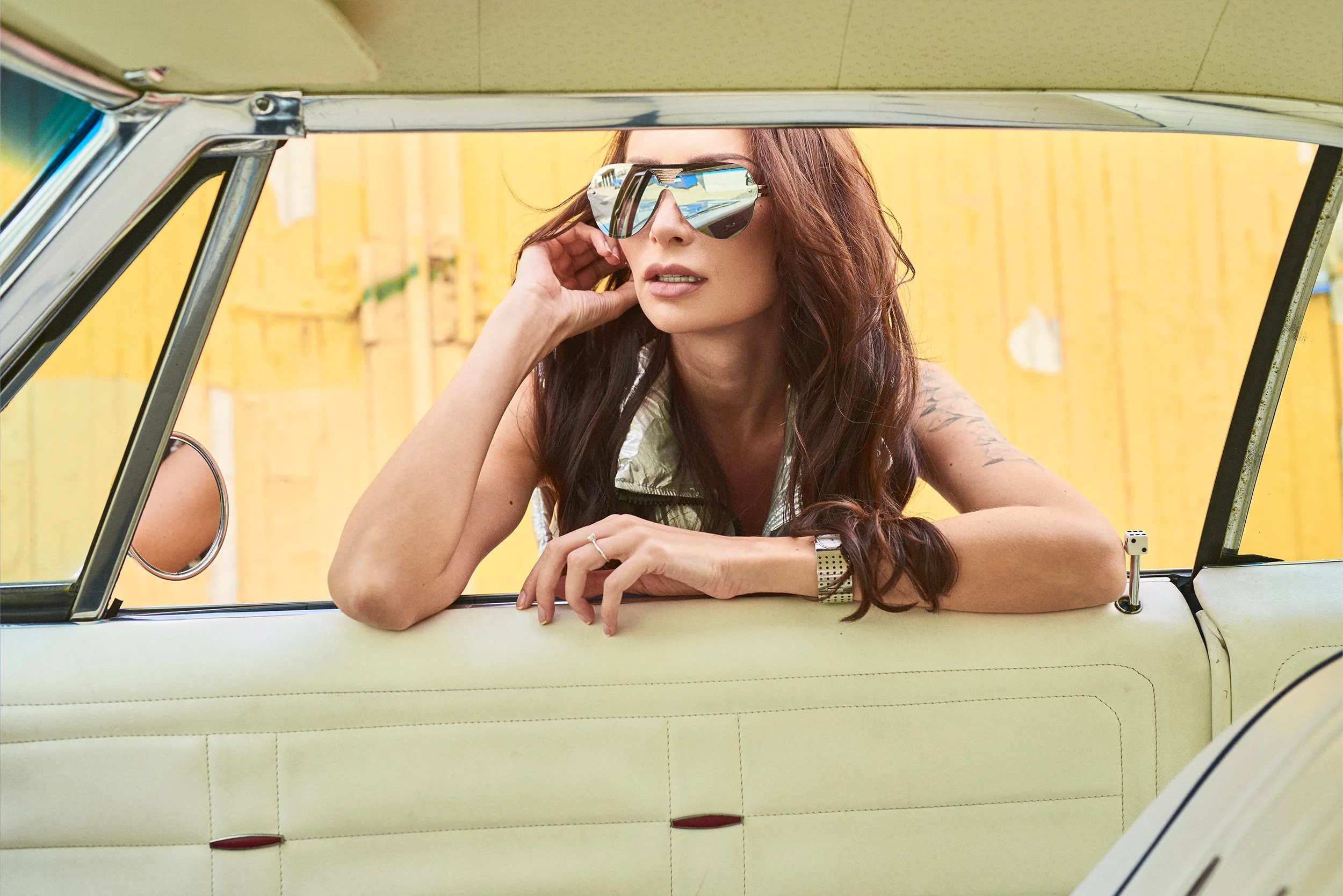
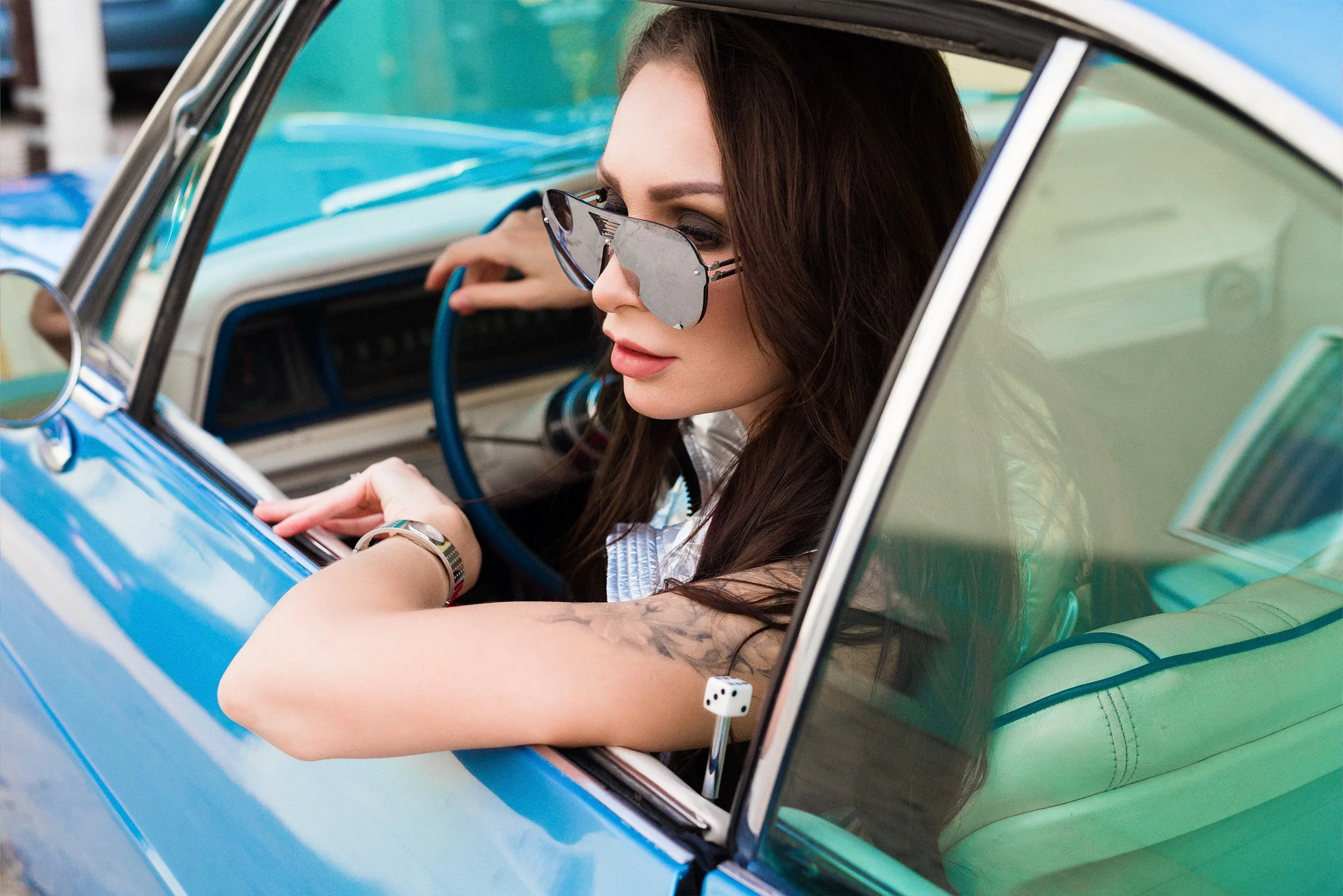
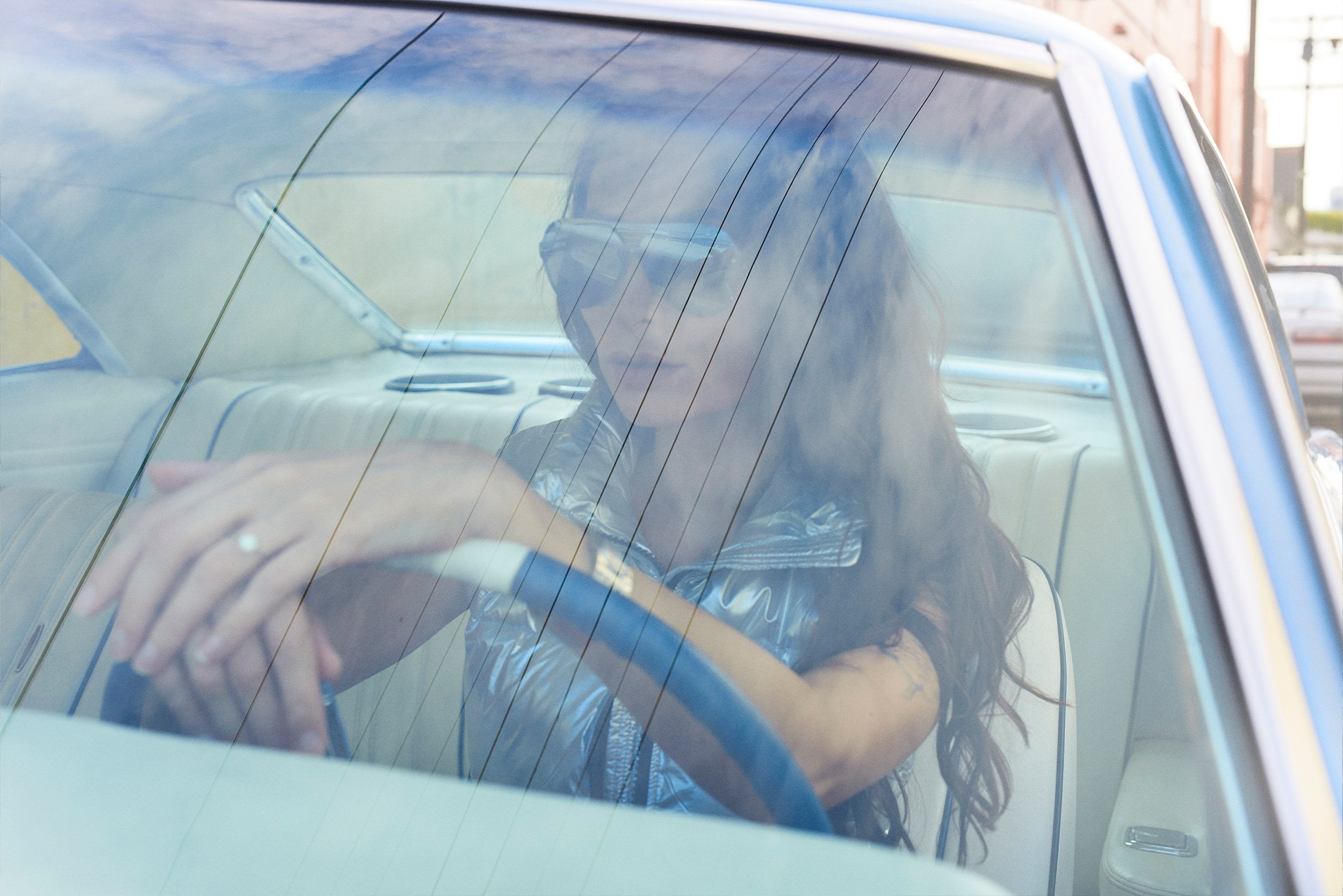
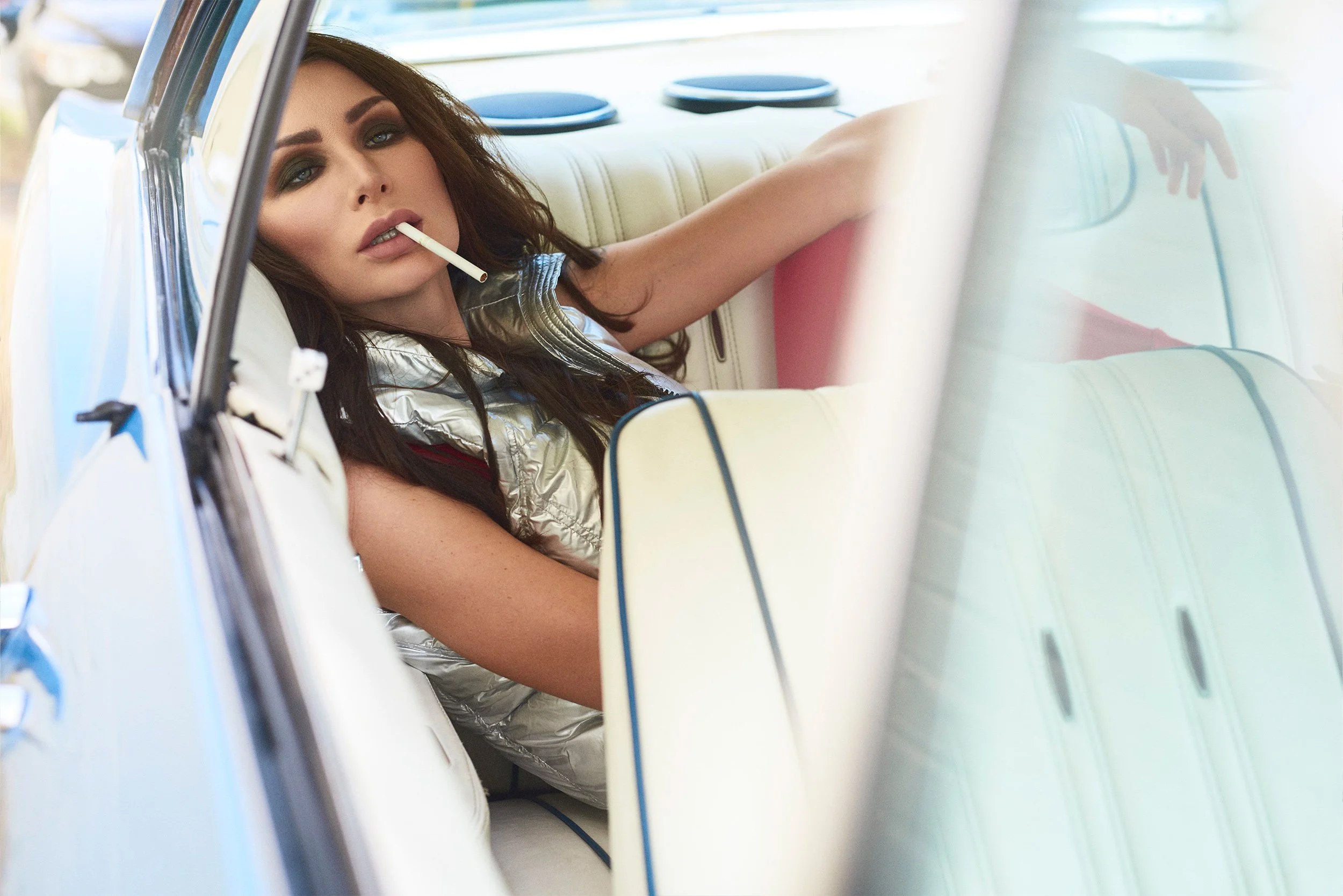
Medium compositions use the doors, windows, chrome and bodywork of the Impala to frame the fashion.
Closer portraits remove most of the automobile and return attention to Larissa, her expression and the wardrobe.
That variation gives the finished series rhythm while also creating photographs capable of serving different editorial and commercial purposes.
San Diego Fashion Photography on Location
Golden Hill gave the photographs something a neutral studio could not.
The neighborhood has residential architecture, mature streets, warm surfaces and the kind of direct Southern California sunlight that changes constantly as the day moves.
Instead of hiding those qualities, Blue Impala incorporates them.
The environment creates context around the fashion without becoming a travel photograph. The automobile gives the frame another visual anchor, while the styling keeps the subject clearly rooted in fashion.
That balance is important in location photography.
A strong location should make an image more specific without competing with the product, wardrobe or person the photograph is ultimately built around.
For fashion photography in San Diego, that means using the city for more than beaches and recognizable landmarks. Neighborhoods, architecture, streets, automobiles and natural light can all become part of a campaign's visual language.
Blue Impala is an example of that approach: San Diego is present in the photographs, but the fashion remains the subject.
From Fashion Editorial to Commercial Campaign
Although Blue Impala was created as an editorial, the visual strategy is closely related to commercial fashion photography.
A fashion campaign needs more than one attractive hero photograph.
Brands frequently need a family of images that can work across different formats: advertising, websites, editorial placements, social media, lookbooks, launch materials and digital campaigns.
That requires variation.
A wider environmental photograph can establish the campaign world.
A full-length image communicates silhouette and styling.
A closer portrait gives the campaign a human focal point.
Details can emphasize clothing, accessories or texture.
The photographs should be different enough to perform separate jobs while still looking as though they belong to the same production.
Blue Impala naturally developed that kind of image system.
The 1966 Impala Super Sport, Golden Hill location, wardrobe and color palette create continuity across the story while allowing the compositions themselves to change.
That is one of the principles I bring to San Diego commercial and fashion photography: create a visual identity first, then build enough variation around it that the final images remain useful beyond a single placement.
Commercial Fashion Photography With a Strong Visual Identity
Commercial photography works best when the concept strengthens the clothing rather than overwhelms it.
The Impala is visually powerful, but Blue Impala never becomes an automotive shoot.
The car functions as a design element.
Its blue finish adds a saturated block of color. Chrome creates highlights and reflections. Windows and door frames create natural framing devices. Its size introduces contrast between the human figure and the environment.
Larissa remains the center of the images.
That distinction matters in commercial fashion photography because a campaign can have a memorable concept without losing sight of what the client actually needs to communicate.
For an apparel brand, that might be clothing.
For an accessories company, it could be a bag, sunglasses or jewelry.
For another campaign, it may be the personality and identity surrounding the product rather than the product alone.
The concept should support that purpose.
Styling a San Diego Fashion Story
Wardrobe for Blue Impala was provided by Forever 21, with styling and creative direction by Brandon Cannon and makeup by Joanna Camargo.
The styling works because it does not attempt to imitate the era of the automobile literally.
Instead of turning the photographs into a period piece, the wardrobe remains contemporary while the 1966 Impala introduces the vintage reference.
That contrast gives the series more longevity.
The viewer recognizes the Americana influence immediately, but the photographs still function as contemporary fashion imagery.
It is a useful approach for apparel and fashion campaigns: visual references can establish mood without forcing every element of a production into the same historical or aesthetic category.
The strongest campaigns often come from combining elements that should not necessarily belong together and finding the visual relationship between them.
Fashion Portrait Photography Within a Larger Campaign
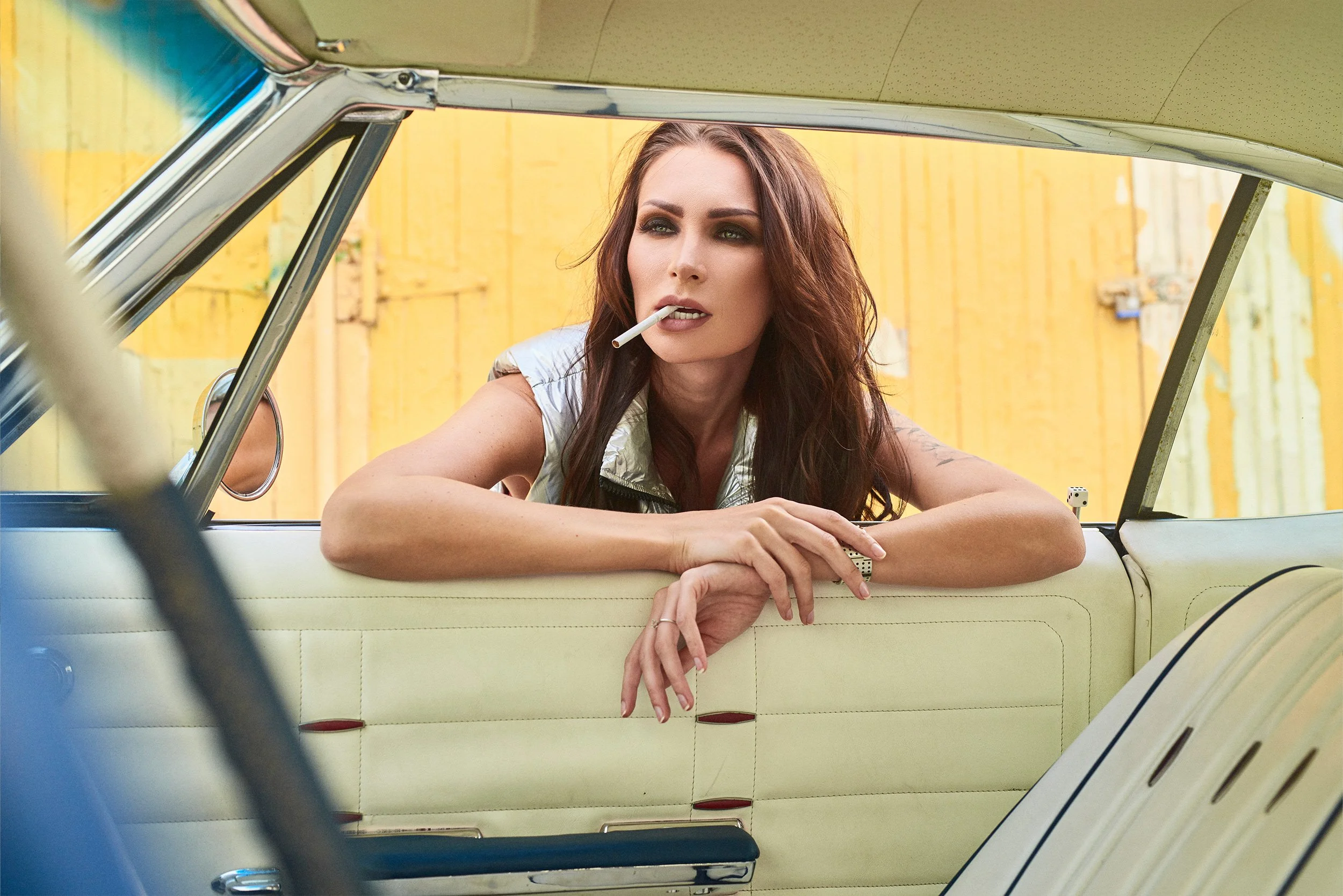
One of the strengths of the series is that not every photograph depends equally on the car.
The tighter images operate as fashion portraits on their own.
This matters commercially because portrait-oriented frames can often be used differently from large campaign images. They may work better for publication layouts, social media, talent features, brand profiles or editorial supporting images.
A location fashion production should ideally create both.
The hero images establish the campaign.
The portraits give it depth.
Together, they create something more useful than a gallery composed entirely of variations of the same photograph.
For Blue Impala, the close portraits also create a visual pause from the scale and graphic weight of the automobile.
The story repeatedly moves from environment back to subject.
That rhythm is part of what makes the final series feel editorial rather than simply documentary.
Published Fashion Editorial
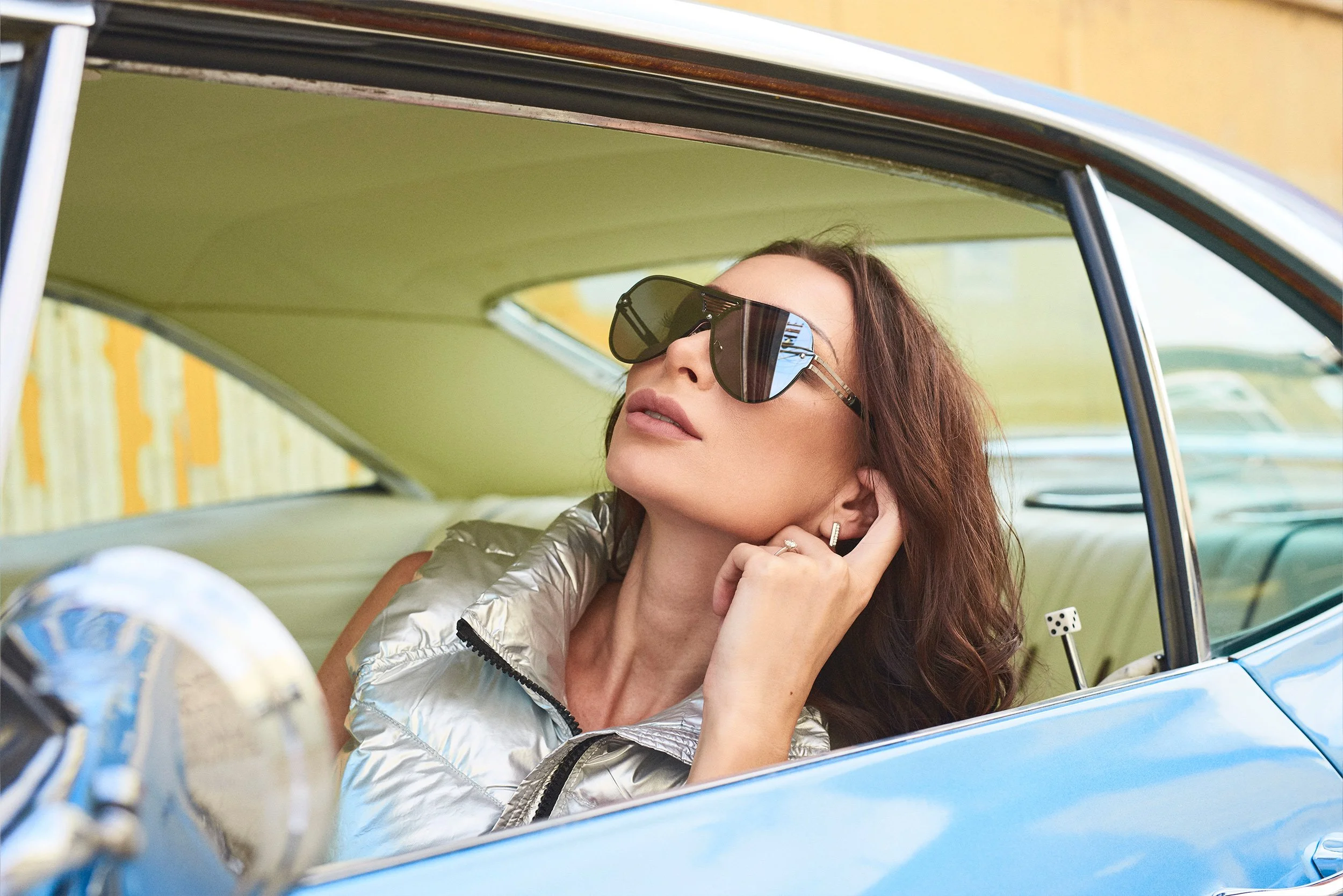
Selected photographs from Blue Impala were later published in IMIRAGE Magazine.
Publication was a natural extension of the project because the series was conceived as a connected fashion story rather than a collection of unrelated portraits.
The model, wardrobe, automobile, neighborhood and light all participate in the same visual idea.
That coherence is what allows a fashion project to work across a sequence rather than relying entirely on one standout frame.
Blue Impala ultimately became a study in how a recognizable location and a strong physical object can shape a fashion editorial while still leaving enough room for the subject and wardrobe to remain central.
San Diego Fashion & Commercial Photography
Blue Impala represents the kind of fashion photography I want to create in San Diego: visually specific, location-aware and capable of moving between editorial and commercial applications.
San Diego provides far more than a conventional coastal backdrop.
Its neighborhoods, architecture, sunlight, streets and Southern California character can become part of fashion and commercial productions in ways that make campaigns feel tied to a real place.
For brands, designers, publications and creative teams, that creates opportunities for imagery that can function across fashion editorials, apparel campaigns, advertising, lookbooks, social campaigns and branded content.
The objective is not simply to place fashion in an interesting environment.
It is to find a relationship between wardrobe, subject, location, light and commercial purpose strong enough that the finished photographs feel like they could only have come from that production.
Blue Impala is one example of that approach.
Credits
Photography: Aram Kay
Model: Larissa Sergienko
Makeup: Joanna Camargo
Styling & Creative Direction: Brandon Cannon
Wardrobe: Forever 21
Vehicle: 1966 Chevrolet Impala Super Sport
Location: Golden Hill, San Diego, California
Publication: IMIRAGE Magazine
Continue Exploring
About
The philosophy and creative process behind every project.
Portfolio
Commercial campaigns, fashion editorials, and selected work.
Project Inquiries
Let’s discuss your next campaign or creative project.