From a lean designer launch to a professionally produced seasonal campaign, here's where the money goes, what brands often overlook, and how to invest in photography that serves the business.
By Aram Kay | Fashion & Commercial Photographer
Los Angeles · San Diego | 2027 Planning Edition
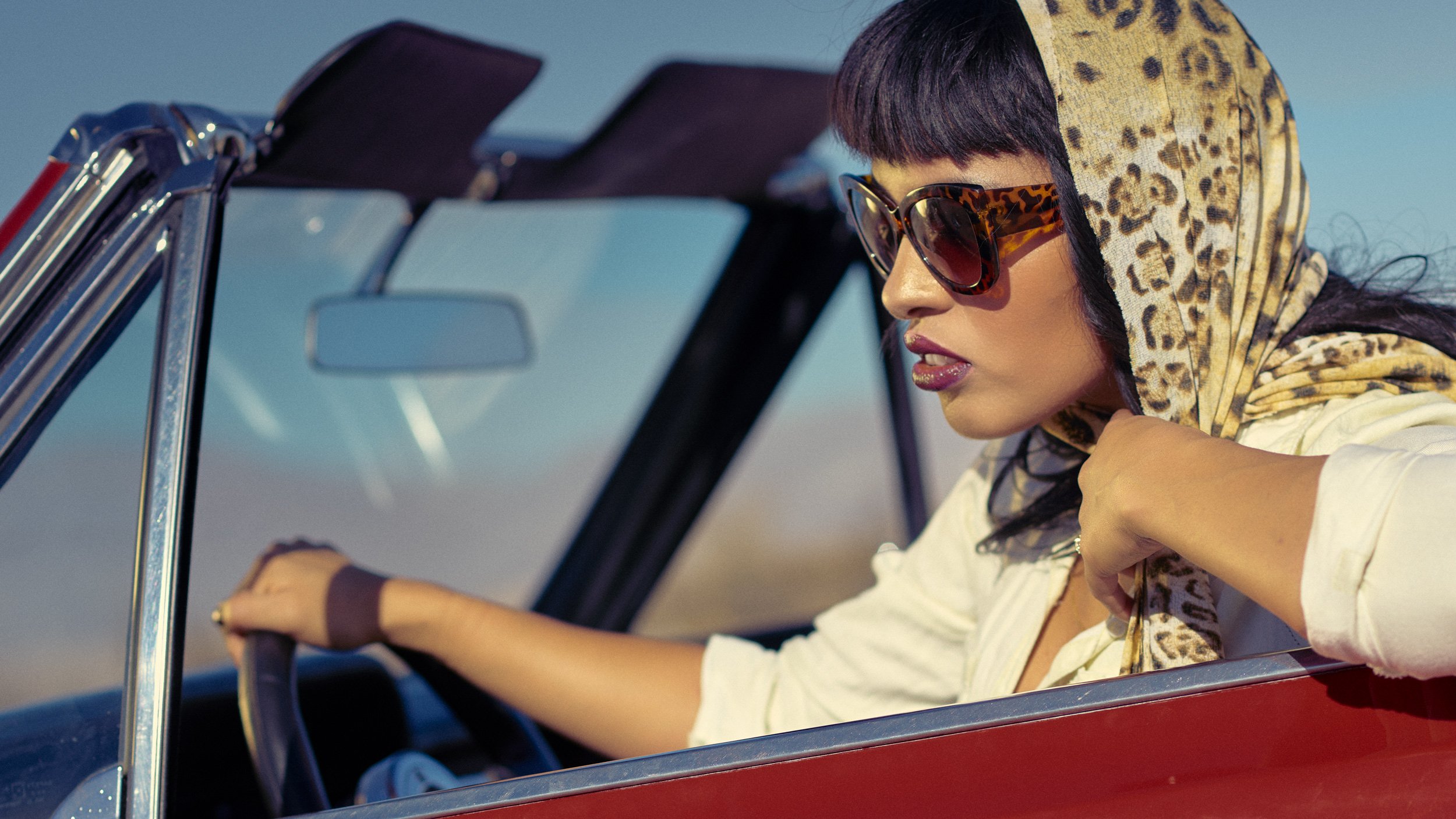
A strong fashion campaign looks effortless. Beautiful light, cohesive styling, a compelling location, and a collection that feels right at home in every frame.
What the viewer doesn't see is everything required to create it: casting, studio time, wardrobe preparation, lighting equipment, image licensing, retouching, and the people keeping the production on track.
As fashion brands prepare their 2027 collections and advertising campaigns, one of the first questions is also one of the most practical:
How much should a professional fashion photoshoot actually cost in Los Angeles?
The answer depends on more than the number of photographs delivered.
A designer launching a debut collection with an emerging photographer and a compact crew has different requirements from an established label commissioning a commercial campaign for paid advertising. Both can produce compelling imagery, provided the creative expectations, production scope, and budget are aligned.
To understand how those costs work, it helps to examine the latest available Los Angeles production benchmarks and the decisions that determine where the money goes.
This guide uses published pricing information available through late 2026 to help brands plan their 2027 productions. The figures are not forecasts of confirmed 2027 market rates.
Important Pricing Disclaimer
All pricing and production budgets presented in this article are illustrative estimates provided for educational and general planning purposes only. They do not represent fixed industry rates, guaranteed production costs, or the professional fees charged by Aram Kay.
Actual costs can vary significantly and may be substantially higher depending on the professionals hired, their experience and reputation, project complexity, production scale, geographic location, scheduling requirements, and intended commercial usage.
This applies to every aspect of a production, including photographers, creative directors, producers, models, wardrobe stylists, hair and makeup artists, photography assistants, digital technicians, studio and location rentals, equipment, retouching, and licensing.
Established industry professionals, specialized creative teams, and productions involving extensive preparation, premium talent, complex lighting, multiple locations, or broader advertising rights may command fees considerably above the examples provided.
The budgets outlined in this article should therefore be viewed as hypothetical planning scenarios rather than pricing standards, minimums, maximums, or quotations. Every commercial photography project should be individually evaluated and estimated according to its specific creative, production, and licensing requirements.
The Real Cost of a Fashion Photoshoot in Los Angeles in 2027
There is no universal rate card for commercial fashion photography.
Photographers price their work according to experience, creative responsibility, production complexity, and licensing. Studio rentals, talent, styling, equipment, and post-production add separate costs.
A photographer's creative fee may represent only part of the final budget.
For brands planning a fashion campaign in 2027, the following published benchmarks provide a useful starting point.
Photographer Fees
Emerging fashion photographers may charge approximately $750–$1,500 per day, while mid-level fashion photographers may charge around $1,500–$4,000 per day.
Established commercial fashion photographers can command approximately $3,000–$8,000 or more per day, depending on the assignment and before additional licensing and production expenses.
These ranges are indicative estimates drawn from Los Angeles photographer David Christopher Lee's published pricing commentary. They are not statistically measured industry averages, and the ranges overlap.
Experience alone does not determine a photographer's fee. Creative responsibilities, licensing, production complexity, reputation, and the intended use of the photographs can all influence pricing.
Studio Rental Costs
Studio rental introduces another consideration.
According to Peerspace's Los Angeles marketplace data available through November 2026, photo studios averaged approximately $77 per hour.
However, that figure represents a marketplace average across different types of spaces. Larger commercial studios, specialized production stages, and facilities with extensive equipment may cost considerably more.
A basic daylight studio and a fully equipped advertising production facility are not interchangeable, even if both are listed as photography studios.
Production Crew and Post-Production
Professional crew expenses vary by role and production requirements.
Published commercial production estimates from photographer Dawn Heumann indicate that wardrobe and prop stylists may charge approximately $950–$1,600 per day.
Professional photography assistants may range from $650–$1,200 per day, depending on responsibilities and experience. Dedicated digital technicians can cost approximately $750–$950 per day.
Commercial retouching introduces another significant expense. Agency-level finishing may range from approximately $150–$300 or more per image, depending on complexity, revisions, and the level of detail required.
These figures reflect published professional estimates from commercial productions in Los Angeles and Northern California. They should not be interpreted as standardized or guaranteed 2027 rates.
References: David Christopher Lee — Fashion Photography Pricing, Peerspace — Los Angeles Photo Studios, and Dawn Heumann — Commercial Production Costs.
Three Fashion Photography Budgets for 2027, Explained
For independent designers and growing fashion brands, production budgets can be understood through three practical scenarios.
A lean launch shoot, with an illustrative budget of $3,200, focuses on introducing a collection and creating organic content.
A streamlined fashion lookbook, with an illustrative budget of $6,500, supports a coordinated presentation of a clothing collection.
A produced brand campaign, with an illustrative budget of $17,200, is designed around a defined commercial advertising assignment.
These examples demonstrate how expenses accumulate as creative expectations, photographer experience, and production requirements increase.
The following budgets are original hypothetical planning examples for 2027. They are not statistically measured Los Angeles market averages, actual client invoices, or Aram Kay's service rates. They assume carefully controlled production scopes and negotiated fees. Applicable taxes, agency commissions, insurance, payroll-related costs, permits, and other requirements may increase the totals.
Scenario 1: The Lean Launch Shoot
Illustrative 2027 budget: $3,200
Imagine an emerging designer preparing to introduce a capsule collection.
The brand needs a small selection of images for its website and organic social media. The creative direction is straightforward: one model, one studio, a prepared wardrobe, and a compact shooting schedule.
The designer handles styling personally. An emerging photographer is hired for a half-day project, while a hair and makeup artist prepares the model.
How the $3,200 budget breaks down
The emerging photographer receives $1,250 for the half-day project, preparation, and limited usage rights. A half-day studio rental accounts for $400, while the independent model and limited agreed usage are budgeted at $500.
Hair and makeup add $350, with another $150 allocated to basic lighting and equipment.
Standard image corrections for eight photographs account for $300, while the remaining $250 covers meals, supplies, and contingency.
Together, these expenses produce an illustrative total of $3,200.
The $1,250 photography allowance is an example of a compact project fee, not an established commercial photographer's full-day rate.
The model allowance assumes an independently negotiated, limited-use arrangement rather than a higher-cost agency casting. The $300 post-production allowance covers basic color work, cropping, and minor corrections—not advanced beauty or advertising retouching.
This production also assumes the brand takes responsibility for substantial preparation and does not require a producer, dedicated assistant, location moves, or elaborate lighting setups.
Those responsibilities don't disappear. They are simply handled within a smaller team.
Best suited for: Debut collections, emerging designers, small clothing labels, and focused website or organic social launches.
The trade-off: A compact production keeps initial costs manageable, but it limits the complexity of the concept, the number of setups, and the amount of professional support available on set.
Scenario 2: A Streamlined Fashion Lookbook
Illustrative 2027 budget: $6,500
Consider a growing clothing brand preparing a seasonal collection.
The company needs a consistent visual language across multiple outfits. Garment presentation, silhouette, styling, lighting, and image-to-image consistency become more important.
The brand books a full-day studio production with an experienced working photographer, dedicated wardrobe support, a photography assistant, and a model.
How the $6,500 budget breaks down
The photographer's creative fee and defined limited-use license account for $2,000.
Studio rental adds $600, while the model and agreed usage are budgeted at $900.
Wardrobe styling represents $950, hair and makeup add $450, and a photography assistant is allocated $650.
Standard image finishing for ten photographs accounts for $300, with $150 reserved for basic equipment and another $150 for meals and supplies.
A final $350 is included as contingency.
The resulting illustrative production budget is $6,500.
The styling and assistant allowances are closer to the lower end of the professional commercial rates cited earlier.
The equipment allowance assumes a simple setup and access to photographer-owned equipment or studio inclusions. The post-production allocation assumes standardized corrections rather than detailed high-end retouching.
At this level, adding dedicated support can improve the production's efficiency.
A stylist focuses on the garments while the photographer concentrates on lighting, composition, expression, and maintaining a coherent visual treatment.
The result should be more than a collection of attractive individual photographs. The images need to work together.
Best suited for: Growing fashion labels, seasonal lookbooks, designer collections, showroom presentations, and coordinated on-model e-commerce imagery.
The trade-off: This budget offers better production support while remaining disciplined about location, crew size, usage rights, and post-production complexity.
Scenario 3: A Produced Fashion Brand Campaign
Illustrative 2027 budget: $17,200
Now imagine an established independent fashion label preparing a seasonal campaign for its website, paid digital advertising, promotional materials, and press outreach.
The images need to establish a recognizable visual identity, not simply document individual garments.
The photographer is responsible for creative direction and consistent execution, supported by production coordination, wardrobe styling, controlled lighting, and a defined commercial licensing agreement.
How the $17,200 budget breaks down
An established photographer's creative fee, preparation, and defined commercial license account for $4,500.
Limited production planning and coordination add $1,500, while studio or location rental is budgeted at $1,200.
The model and specified commercial usage represent $1,800, with another $1,500 allocated to wardrobe styling and preparation.
Hair and makeup account for $850.
A photography assistant supporting the basic tethered workflow is budgeted at $900, while lighting and equipment add $850.
Props and art direction materials account for $600.
Commercial retouching for twelve final images represents $1,800. Meals and logistics add $500, and $1,200 is reserved for contingency.
Combined, these expenses create an illustrative production budget of $17,200.
Here, photography becomes part of a coordinated advertising production.
The $4,500 photographer allocation assumes an established professional and a specifically negotiated, limited commercial license. It does not represent unrestricted worldwide advertising rights.
The producer allowance assumes limited preparation and coordination rather than an extensive multi-day production schedule.
The assistant allowance covers one supporting crew role with basic tethering, not a separate senior lighting technician and dedicated digital technician.
Retouching is budgeted at $150 per image, consistent with the lower end of the published agency-level commercial finishing estimates.
This scenario is deliberately streamlined. Extensive casting, multiple locations, significant art builds, additional crew, broader licensing, or motion production would require a larger budget.
Best suited for: Established independent fashion brands, seasonal advertising campaigns, collection launches, and defined multi-channel commercial promotions.
The trade-off: The higher investment supports creative development, stronger production control, and more detailed finishing, but the budget still needs clearly defined boundaries.
What About Larger National Fashion Campaigns?
The budgets above are not intended to represent major national advertising productions.
Large campaigns may involve multiple shooting days, agency teams, extensive talent casting, specialized styling departments, elaborate locations, motion production, and substantial commercial usage agreements.
In her published production breakdown, commercial photographer Dawn Heumann describes produced national campaigns ranging from approximately $40,000 to $140,000, with larger multi-day stills-and-motion campaigns reaching substantially higher totals.
Those figures come from her own production estimates and experience, not a universal market average.
The distinction matters.
A $17,200 independent-brand campaign and a six-figure national advertising production are different operational undertakings.
Both require professional decisions, but their staffing, risk, distribution, and production demands are not comparable.
For brands entering 2027 with larger marketing ambitions, understanding this distinction can help establish realistic expectations before creative development begins.
Why a Photographer's Day Rate Doesn't Tell the Whole Story
One of the most common mistakes brands make is treating a commercial photography estimate as though it were simply an hourly wage for operating a camera.
A professional production usually involves three distinct financial considerations.
The Creative Fee
This compensates the photographer for the creative and technical responsibilities of the assignment.
Those responsibilities can include interpreting the brief, developing the visual treatment, lighting design, directing subjects, coordinating with the creative team, and delivering photographs that meet the agreed requirements.
Experience matters because commercial assignments often require decisions to be made quickly, under pressure, without sacrificing consistency.
A seasoned photographer brings more than technical competence. The value also lies in interpreting a creative brief, understanding how the images will function commercially, and maintaining a consistent visual direction throughout the production.
Production Expenses
These cover the people, spaces, equipment, preparation, and logistics required to make the shoot possible.
The complexity of the concept determines how much support is needed.
A simple studio lookbook may require a compact team. A major advertising production may involve producers, lighting crews, digital technicians, stylists, set designers, location personnel, and additional specialists.
These expenses are not interchangeable with the photographer's creative fee.
Image Licensing
Licensing determines how the client may use the finished photographs.
An image licensed for organic social media is not necessarily licensed for paid digital advertising, print campaigns, retail displays, or unrestricted international use.
Some estimates include a defined license within the photographer's quoted fee. Others list licensing separately.
The important point is that the agreement specifies the permitted use.
Instead of asking only, "What is your day rate?", a more useful question is:
"What level of creative direction, production support, and licensing do we need to achieve this campaign's objectives?"
Location Costs: Why Los Angeles Can Get Complicated
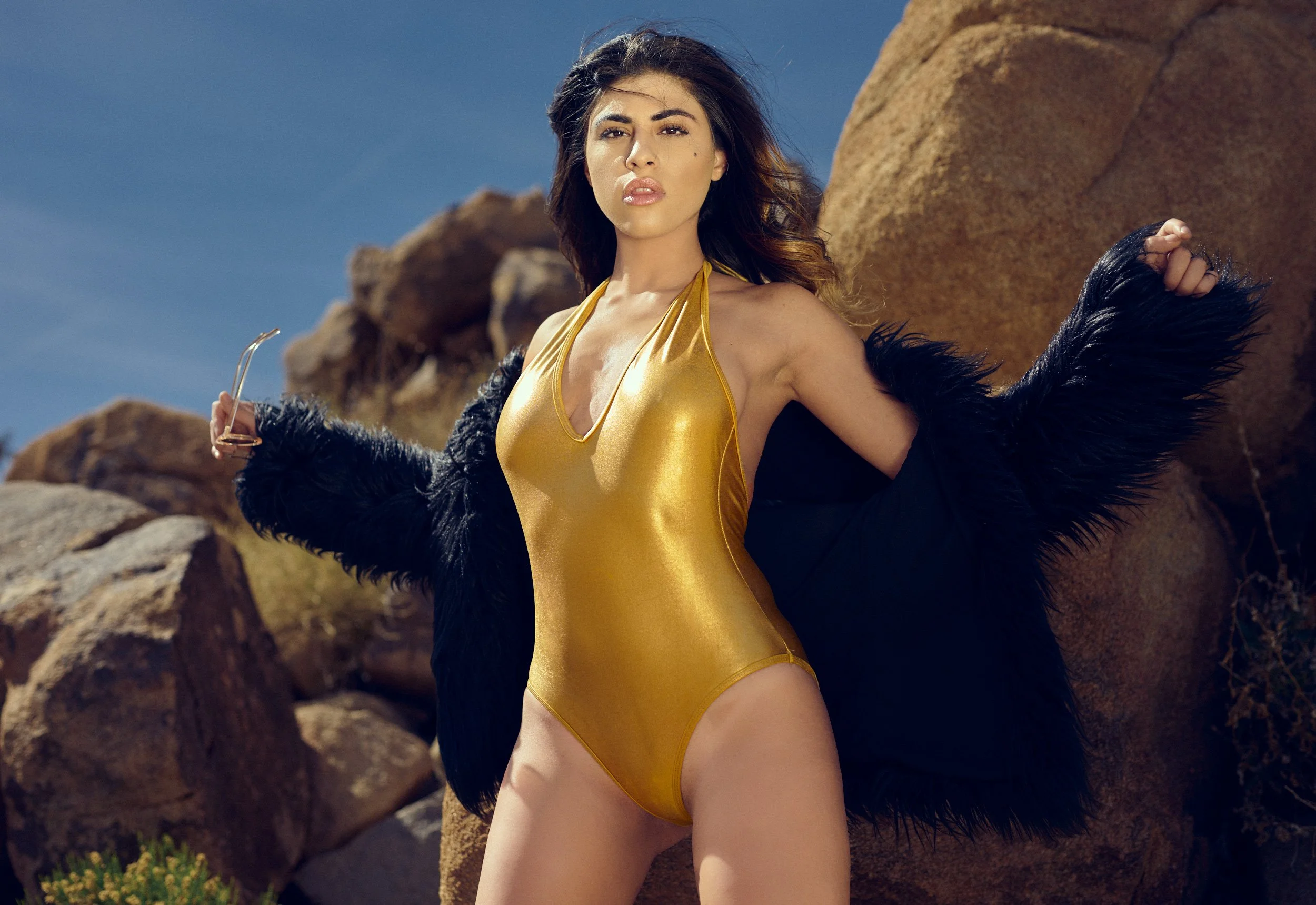
Los Angeles offers extraordinary visual variety.
Daylight studios, industrial spaces, architectural homes, beaches, urban streets, and nearby desert landscapes can all support different kinds of fashion photography.
But location selection affects more than the visual mood.
A seemingly inexpensive location may introduce permits, insurance requirements, parking arrangements, equipment transport, restricted access, or additional staffing.
Understanding FilmLA's Permit Fees for 2027 Planning
According to FilmLA's published fee guidance available in late 2026, a qualifying still-photography application costs $104 and can cover up to 15 combined cast and crew members and up to five locations within a seven-day period.
However, FilmLA explains that certain activities—including productions with 16 or more cast and crew, B-roll, special effects, or street and sidewalk closures—can trigger the $931 standard motion-permit application fee.
These are application fees, not necessarily the final permit cost. Government charges, notifications, monitoring, and other requirements may apply.
FilmLA also operates a low-impact permit pilot for qualifying productions within the City of Los Angeles.
Introduced in April 2026 and extended through April 30, 2027, the pilot offers a $350 application fee for eligible productions with limited activities, locations, and crew sizes.
Importantly, FilmLA notes that ordinary qualifying still-photography shoots are generally more affordable through the standard still-permit process, although exceptions can apply.
These published figures provide a useful planning reference, but brands scheduling productions in 2027 should confirm the fees and program status before applying.
Sources: FilmLA — Permit Fees and Requirements, FilmLA — Low-Impact Permit Pilot Program.
For brands working with smaller budgets, this makes location planning especially important.
A studio with reliable power, controlled lighting, changing facilities, and convenient access can reduce logistical uncertainty.
An outdoor or architectural location may provide a more distinctive aesthetic, but additional requirements can quickly affect the production budget.
The right location is the one that supports the creative concept without introducing unnecessary operational costs.
Permit requirements also vary by jurisdiction and activity, so a location outside the City of Los Angeles should not automatically be assumed to follow the same fee schedule.
Photography Licensing: The Expense Brands Frequently Misunderstand
Paying for a photoshoot and owning the underlying copyright are not necessarily the same thing.
Under U.S. copyright law, the photographer is generally the initial copyright owner of the photographs they create, subject to exceptions such as qualifying work-made-for-hire arrangements or valid copyright transfers.
That means the terms of the production agreement matter.
Source: U.S. Copyright Office — What Photographers Should Know About Copyright.
For many fashion brands, purchasing the copyright outright may not be necessary.
A clearly defined commercial license can give the company the rights it needs while preserving the photographer's ownership.
A professional agreement should address several important considerations.
Usage channels: Will the photographs appear on the company's website, organic social media, paid digital advertising, print materials, retail displays, packaging, or other media?
Territory: Will the images be distributed locally, regionally, nationally, or internationally?
Duration: Does the license cover a defined campaign period, one year, multiple years, or another negotiated term?
Exclusivity: Does the client receive exclusive usage of the images? Any restrictions on the photographer working for competing brands should be negotiated separately.
Deliverables: How many final images will be provided, in which formats, and with what level of retouching?
Model agreements are another consideration.
A model's payment for time on set does not automatically establish unrestricted commercial permission to use that person's likeness.
Professional talent agreements should define the relevant usage rights and any additional fees.
This does not mean every emerging designer needs an expensive licensing package.
It means both parties should understand what is being purchased before production begins.
Copyright ownership, work-for-hire arrangements, and usage agreements depend on applicable law and contract terms. The information above is general guidance, not legal advice.
The Most Expensive Mistake Isn't Always Spending Too Much
Fashion photography is one of the most visible expressions of a brand's identity.
For many customers, the images are the first encounter with a collection.
That makes visual consistency more than an aesthetic preference.
A photoshoot can be completed on schedule and still fail to deliver what the brand actually needs.
The photographs might not show the garments clearly enough. The lighting may obscure important textures. The composition might leave insufficient space for advertising text. The styling may not reflect the intended customer.
These are not always problems that can be solved in post-production.
Some require an entirely different photograph.
Reshooting a collection can create additional expenses, delay the campaign, and complicate a product launch.
The lowest-priced production is not necessarily the most economical production.
The objective is not to maximize spending.
It is to identify the creative and technical decisions that materially affect the final result.
A well-directed production with a clear concept can be a better investment than a larger shoot without a cohesive visual strategy.
For brands investing in photography for their 2027 collections, thoughtful planning may deliver more long-term value than simply increasing or reducing the production budget.
Five Ways Fashion Brands Can Control Production Costs in 2027
1. Define Where the Images Will Be Used
E-commerce photographs, seasonal lookbooks, and paid advertising campaigns serve different purposes.
They can require different compositions, crop ratios, styling, and retouching.
Clarifying the intended use before requesting estimates helps avoid unnecessary production work.
If a collection requires both campaign imagery and e-commerce photographs, the production can sometimes be organized to capture both efficiently—but the shot list and schedule should account for their different purposes.
2. Prepare Every Look Before Arriving on Set
Wardrobe preparation is one of the easiest areas to underestimate.
Unsteamed garments, missing accessories, incorrect sizes, and last-minute styling decisions consume time that could otherwise be devoted to photography.
Organizing and labeling looks in advance keeps the production moving.
A well-prepared collection allows the creative team to spend more time refining the images instead of solving avoidable wardrobe problems.
3. Choose Locations Strategically
Moving models, wardrobe, crew, and lighting equipment between locations can consume a substantial portion of a shooting day.
A versatile studio or carefully selected location may allow multiple visual treatments without repeated relocation.
The savings depend on the production, but efficient location planning can make a meaningful difference.
The ideal location should support the creative concept while keeping practical requirements under control.
4. Prioritize Retouching
Not every photograph requires extensive commercial retouching.
A campaign may need a relatively small group of highly finished hero images, alongside supporting photographs that require only consistent color, exposure, cropping, and basic cleanup.
Defining those categories in advance makes the post-production estimate easier to control.
It also helps the brand prioritize the images that will receive the most commercial exposure.
5. Communicate the Budget Early
A realistic budget range helps the photographer evaluate what is achievable.
With clear financial parameters, the creative team can recommend appropriate locations, crew sizes, shooting schedules, and deliverables.
This is often more productive than commissioning an elaborate concept and discovering later that the budget cannot support it.
A clearly defined budget also makes it easier to distinguish essential production elements from optional enhancements.
What to Send When Requesting a Fashion Photography Estimate
A useful photography brief doesn't have to be an elaborate presentation.
It needs to answer the questions that determine the scope of the assignment.
Before approaching a photographer for a 2027 campaign, prepare the following information.
Project overview: Describe the brand, collection, approximate number of looks, and intended launch date.
Creative direction: Provide references that communicate the desired atmosphere, styling, lighting, and visual expectations.
Deliverables: Identify the approximate number of finished photographs, important compositions, crop requirements, and any additional motion assets.
Production details: Explain whether the shoot will take place in a studio or on location, how many models are needed, and which production elements the brand already has arranged.
Image usage: Specify whether the images will be used on the website, organic social media, paid advertisements, print materials, or other channels, along with the expected territory and duration.
Target budget: Provide an approximate range for the complete production rather than focusing only on the photographer's fee.
These details allow the photographer to determine whether the proposed concept, production approach, and budget are aligned.
They also make it easier for the client to compare estimates based on actual scope rather than price alone.
Final Perspective: Invest in the Image Your Brand Actually Needs
A successful fashion campaign isn't defined by the size of its crew or the total amount spent.
It is defined by how effectively the photography supports the collection, the creative concept, and the audience the brand wants to reach.
A debut designer may plan a disciplined $3,200 launch shoot using an emerging photographer. A growing label may allocate $6,500 for a streamlined seasonal lookbook. An established independent brand may consider $17,200 for a carefully scoped commercial campaign.
These examples illustrate different levels of production investment, not the price of creative quality or guaranteed 2027 market rates.
The strongest results come from understanding what the photographs need to accomplish, then assembling the appropriate team and resources to achieve that objective.
Good photography should not simply show what a brand is selling. It should help communicate why the collection matters.
Planning a Fashion Campaign in Los Angeles for 2027?
Every collection has different production requirements.
Whether you're launching a fashion label, developing a seasonal advertising campaign, or preparing a new collection for publication, the right approach begins with understanding your creative direction, intended audience, and commercial objectives.
Aram Kay is a fashion and commercial photographer and director serving Los Angeles and San Diego, creating campaigns, editorials, advertising imagery, artist portraits, and brand-focused visual storytelling.
Explore selected photography work, review Los Angeles fashion photography services, or discuss your upcoming project.
Research and Methodology
This 2027 planning guide was prepared in November 2026 using the latest publicly available photography pricing commentary, studio-booking marketplace data, FilmLA permit information, commercial production estimates, and U.S. copyright guidance.
The three budgets are original illustrative planning models created to explain how production expenses can accumulate across different project scopes.
They are not invoices from actual commissions, statistically representative market averages, confirmed 2027 industry rates, or binding quotes for Aram Kay's services.
All financial examples are in U.S. dollars. Applicable taxes, agency fees, payroll-related expenses, permits, insurance, and other project-specific costs may increase the total.
The figures should be reviewed as new 2027 market information becomes available.
Primary References
David Christopher Lee — How Much Does a Fashion Photographer in Los Angeles Cost?
https://www.dclee.net/blog/how-much-does-a-fashion-photographer-in-los-angeles-cost
David Christopher Lee — Los Angeles Photography Pricing
https://www.dclee.net/blog/how-much-does-a-photographer-cost-in-los-angeles
Peerspace — Los Angeles Photo Studio Rental Pricing
https://www.peerspace.com/venues/los-angeles--ca/photo-studio
Dawn Heumann — What a Commercial Photo Shoot Actually Costs
FilmLA — Payment, Deposits and Refunds
https://info.filmla.com/filmla-policies/payment-deposits-refunds
FilmLA — Low-Impact Permit Pilot Program
https://info.filmla.com/general-information/low-impact-permit-pilot-program
U.S. Copyright Office — What Photographers Should Know About Copyright
https://www.copyright.gov/engage/photographers/
Rates, permitting requirements, and production costs may change. Confirm current requirements and pricing directly with the relevant providers before commissioning a shoot.